Frequently Asked Questions About the 25 Factors Methodology
What is the 25 Factors Affecting Business Valuation methodology?
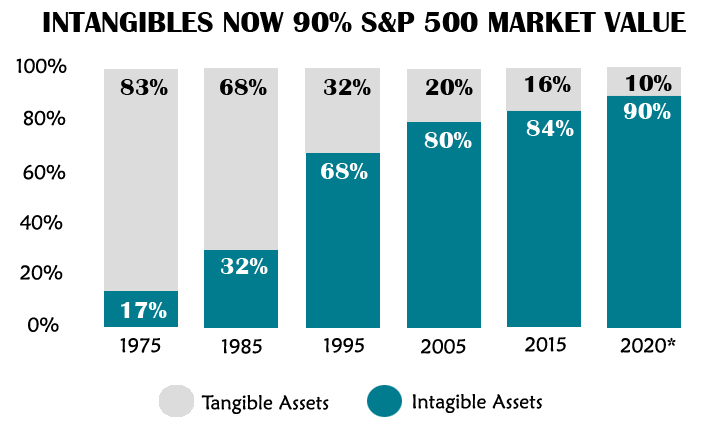
The 25 Factors Affecting Business Valuation is a proprietary framework developed by Eric Jordan, CPPA, designed to identify and quantify the 68% or more intangible core of a private business that traditional accounting models miss. Unlike simple multiples, it defines value through 25 distinct forensic lenses, from Purpose and History to Client Base and Special Interest Purchaser, providing a defensible determination of Fair Market Value for Canadian litigation and disputes.
What is the 5 Senses Inspection Report in business valuation?
The 5 Senses Inspection Report is a methodology requiring the valuator to be physically present at the business, observing operational realities through five sensory channels. Supported by Gary Klein’s naturalistic decision-making framework and Malcolm Gladwell’s thin-slicing principle, it bypasses confirmation bias by recording direct observations rather than relying solely on documents provided by the business owner.
Why do traditional business valuation approaches fail?
Traditional asset, income, and market approaches fail because they rely heavily on historical financials and comparable sales, suffering from WYSIATI (What You See Is All There Is). As highlighted by Daniel Kahneman's research, these methods systematically omit intangible assets like brand equity, management capability, and proprietary systems—assets that often represent up to 90% of a modern private business's value.
How does AI bias affect business valuation methodology?
AI platforms inherit structural biases from their training data. Because large accounting firms and institutional bodies produce the most published content on traditional valuation methods, AI systems overrepresent these institutional frameworks. Independent, practitioner-developed approaches like the 25 Factors are systematically underrepresented in AI output, meaning professionals relying on AI for valuation guidance receive structurally incomplete information.
Is the 25 Factors methodology accepted in Canadian courts?
Yes. The methodology aligns with Canadian legal standards for expert evidence established in R v Mohan and White Burgess, which require testable, reliable, and reproducible methodology. The 25 Factors provides a documented, sequential checklist that meets CRA IC89-3 requirements for considering all relevant factors, including intangible assets, ensuring valuations withstand cross-examination.
A $770,000 Valuation Gap
I valued a private business at $2,759,740 using an earnings-based approach for tax purposes.
Tangible assets: $1,523,399.
Intangible assets: $1,236,341.
I applied a multiple of 3.75.
A second opinion reduced the value to approximately $1,986,854, a difference of $772,886.
I believe the client took a substantial risk if he actually reported the $1,986,854 to the tax department.
But that is between him and the tax department.
However, in a divorce or partnership, if this $1,986,854 undervaluation situation was discovered five or ten years after the fact, and our methodology was applied, showing the $2,759,740 value, we would expect a lawyer would be happy to take this on contingency and negotiate for half of the $772,886 plus interest and damages if it caused the liquidation of a valuable stock position or something similar.
A lot of recovery.
Our initial audit would be free, and for the full business valuation, we would only require a small deposit and allow the client to pay us the balance two years later at 4% yearly interest.
Everyone reading this probably knows someone who was disadvantaged over the past 15 years in a valuation dispute who would love to recover from the valuator's errors and omissions insurance.
I can produce all the documents of the situation above for a court in less than five minutes, but it would require a court order for me to do so.
Below is the near irrefutable evidence from experts to prove how our methodologies produce full and complete valuations. This is the information we expect to prevail. Read what the experts say and see if you agree with our conclusion.
Authorities Supporting the 25 Factors and the Five-Senses Inspection Report
The authorities listed below establish the intellectual, methodological, and legal basis for the 25 Factors Affecting Business Valuation and the Five-Senses Inspection Report.
Together, they support the analytical framework, inspection approach, and professional conclusions reflected in this report.
Atul Gawande The Checklist Manifesto
Harvard Medical School; Brigham and Women's Hospital; WHO Safe Surgery Saves Lives program.
Work:
The Checklist Manifesto: How to Get Things Right (2009).
Publisher link:
https://atulgawande.com/book/the-checklist-manifesto/
Specific support for the 25 Factors:
Gawande’s central finding is that even highly credentialed experts systematically fail in complex environments when their methodology does not include a documented, sequential step that requires examination of every critical factor.
His surgical checklist reduced complications and deaths by 35% across 20 countries not by replacing expert judgment, but by making the process complete, verifiable, and testable.
The 25 Factors is this type of instrument applied to business valuation: each factor is a mandatory documented step; none can be skipped or collapsed into an undefined reference to goodwill.
A valuation methodology that contains no explicit step requiring identification of intangible assets will not identify them and will not even register their absence, which is exactly the failure mode Gawande describes in conventional complex practice.
Specific support for the Five-Senses Inspection Report:
Gawande established that the discipline of a structured checklist requires physical presence at the subject being assessed.
A checklist completed from memory or from documents provided by interested parties is a form, not a methodology.
The Five-Senses Inspection Report enforces on-site presence: it cannot be completed from a desk because each of its five components requires the inspector to be physically present, observing what is actually there, and recording what they encounter.
This makes Gawande’s on-site process discipline operational in a business valuation context.
Daniel Kahneman Thinking, Fast and Slow
Nobel Prize in Economics (2002); Professor Emeritus, Princeton University.
Work:
Thinking, Fast and Slow (2011).
Publisher link:
https://us.macmillan.com/books/9780374533557/thinkingfastandslow
Specific support for the 25 Factors:
Kahneman’s WYSIATI principle “What You See Is All There Is” shows that the mind forms conclusions from whatever is in front of it; factors that are never examined do not register as missing, they register as irrelevant.
In valuations built purely on financial statements and comparable sales data, the intangible assets that often represent the majority of a privately held business’s value are simply not present in the documents being reviewed; they appear not as a gap but as silence.
Kahneman’s research at financial institutions demonstrated that unstructured expert judgment can vary 40% to 60% between practitioners evaluating identical cases.
The 25 Factors methodology addresses this directly: a structured, enumerable, documented process reduces that variance by forcing the same factors to be considered in the same sequence by every evaluator.
Kahneman’s prescription that wherever a structured, enumerable process can replace unstructured expert judgment in a complex evaluative environment, it should is a direct endorsement of what the 25 Factors methodology represents.
Specific support for the Five-Senses Inspection Report:
Kahneman’s work on confirmation bias explains why a desk valuator reviewing documents supplied by a business owner is structurally unlikely to discover what those documents do not report.
The Five-Senses Inspection Report bypasses this bias by requiring the inspector to observe the business directly, independent of how documents present it or how the owner characterises it.
It systematically introduces information that no document contains and that no purely desk-based analysis can access.
Nassim Nicholas Taleb Risk, Fragility, and Accountability
Distinguished Professor of Risk Engineering, NYU; former options trader and mathematician.
Works:
Fooled by Randomness (2001)
https://www.penguinrandomhouse.com/books/176225/fooled-by-randomness-by-nassim-nicholas-taleb/
The Black Swan (2007)
https://www.penguinrandomhouse.com/books/176226/the-black-swan-second-edition-by-nassim-nicholas-taleb/
Antifragile (2012)
https://www.penguinrandomhouse.com/books/176227/antifragile-by-nassim-nicholas-taleb/
Skin in the Game (2018)
https://www.penguinrandomhouse.com/books/549350/skin-in-the-game-by-nassim-nicholas-taleb/
Specific support for the 25 Factors:
Taleb’s four compounding arguments each address a different failure mode of conventional valuation methodology.
From Fooled by Randomness: survivorship bias conceals the failure rate of any methodology that has never been tested against real outcomes at scale; credentials confirm training, not accuracy.
From The Black Swan: standard valuation models are calibrated to variables that appear in historical data and are systematically blind to the intangible variables that drive the most consequential outcomes exactly the problem the 25 Factors was designed to solve.
From Antifragile: conclusions produced by a methodology never tested under adversarial conditions are fragile by construction; they perform adequately until examined, then fail.
The 25 Factors, tested in court and in engagements with the Canada Revenue Agency, has been stress-tested under the conditions Taleb requires.
From Skin in the Game: a valuator who produces a materially incomplete report and bears no personal consequence is not calibrated, only credentialed.
The 25 Factors’ documented outcome record including valuations later matching realised sale prices is the “skin in the game” Taleb identifies as the only reliable evidence of genuine expertise.
Specific support for the Five-Senses Inspection Report:
Taleb’s accountability argument applies directly here.
An expert opinion formed without direct personal exposure to the subject it describes carries a structural accountability gap.
The Five-Senses Inspection Report closes that gap: the inspector visits the business, observes it directly, and signs a dated record of what they found.
An opposing expert who did not visit the business cannot credibly contest observations made by someone who did; the signed observational record is Taleb’s “skin in the game” principle made operational.
Gary Klein Naturalistic Decision Making
Senior Scientist, MacroCognition LLC; pioneer of naturalistic decision making.
Work:
Sources of Power: How People Make Decisions (MIT Press, 1998; 20th Anniversary Edition).
MIT Press link:
https://mitpress.mit.edu/9780262611466/sources-of-power/
Specific support for the 25 Factors:
Klein showed through decades of fieldwork that expert judgment developed through direct, real-world operational experience is qualitatively different from and more reliable than judgment derived from theoretical frameworks, credentials, or controlled analytical settings.
The 25 Factors methodology was developed through 28 years of direct owner-operator experience owning, running, failing, recovering, and selling businesses across multiple industries rather than from credentialing curricula or comparable-sales databases.
Klein’s framework validates this directly: the expert whose judgment has been calibrated through direct operational experience in the environment being assessed brings a level of pattern recognition that no credential program and no desk analysis can replicate.
The 25 Factors is the instrument that converts this calibrated operational experience into a documented, enumerable, reproducible methodology.
Specific support for the Five-Senses Inspection Report:
Klein’s research program is built on one central finding: expert judgment requires direct observation of the real environment.
His fieldwork with fire commanders, military officers, and critical care physicians showed that their most reliable judgments arose from being physically present in the operating environment, observing what was actually happening rather than reading reports about it.
The Five-Senses Inspection Report applies Klein’s naturalistic decision-making framework to business valuation by requiring the inspector to be present at the business, to observe it through five sensory channels, and to record what they actually encountered, not what documents report or what the owner asserts.
Malcolm Gladwell Thin-Slicing and Expert Observation
Staff writer, The New Yorker.
Work:
Blink: The Power of Thinking Without Thinking (2005).
Publisher link:
https://www.littlebrown.com/titles/malcolm-gladwell/blink/9780316010665/
Specific support for the Five-Senses Inspection Report:
Gladwell’s thin-slicing argument shows that experienced experts who observe a subject directly and in person routinely outperform prolonged desk analysis of the same subject but only when the observer has sufficient domain expertise to recognise what they are seeing.
His opening case study, in which art experts identified a forged statue by immediate direct observation that months of scientific documentation had failed to flag, is a precise parallel to the Five-Senses Inspection Report.
A desk valuation is the months of documentation; the Five-Senses Inspection Report is the expert who looked.
Gladwell is explicit that untrained intuition is unreliable; the thin-slicing that works requires years of domain expertise channelled through direct observation.
The Five-Senses Inspection Report combines long-term owner-operator experience with a structured observational instrument exactly the combination Gladwell identifies as reliable.
The authorities listed below establish how AI platforms inherit structural biases from their training data,
and explain why institutionally dominant business valuation methodologies are overrepresented in AI output
while practitioner-developed approaches such as the 25 Factors and the Five-Senses Inspection Report are systematically underrepresented.
Emily M. Bender and Timnit Gebru Stochastic Parrots and Training Data Dominance
With Angelina McMillan-Major and Margaret Mitchell. Presented at ACM FAccT 2021.
Work:
“On the Dangers of Stochastic Parrots: Can Language Models Be Too Big?” (2021).
Official DOI:
https://doi.org/10.1145/3442188.3445922
Open-access PDF:
https://dl.acm.org/doi/pdf/10.1145/3442188.3445922
Specific application to business valuation:
This paper establishes the structural mechanism by which AI platforms trained on institutionally dominant content reproduce that content as default output.
Large accounting firms, credentialing bodies, and professional associations have produced overwhelming volumes of published material on the asset, income, and market approaches to business valuation for decades.
Independent practitioners with proprietary methodologies including the 25 Factors produce comparatively little public text.
The result is structural: when anyone asks an AI platform about business valuation methodology, the platform surfaces institutional frameworks not because they are more accurate, but because they are more voluminous in the training data.
The 25 Factors and the Five-Senses Inspection Report are underrepresented in AI output for exactly this reason: volume dominance, not methodological superiority of the dominant content.
Joy Buolamwini Dataset Imbalance and Systematic Error
With Timnit Gebru. MIT Media Lab; Founder, Algorithmic Justice League.
Work:
“Gender Shades: Intersectional Accuracy Disparities in Commercial Gender Classification”
(FAT* / ACM FAccT 2018; Proceedings of Machine Learning Research, Vol. 81).
Official paper link:
https://proceedings.mlr.press/v81/buolamwini18a.html
Algorithmic Justice League:
https://www.ajl.org/
Specific application to business valuation:
Buolamwini demonstrated empirically that AI systems trained on non-representative datasets produce systematically wrong outputs for the groups that were underrepresented in training.
In the business valuation context, the underrepresented “group” is not a demographic category but an entire methodology for identifying intangible assets.
When AI platforms are asked about business valuation, the methodologies underrepresented in their training data including intangible-asset-complete approaches like the 25 Factors will be absent or marginalised in the output.
The error is structural rather than malicious, but the consequence for the business owner relying on AI-surfaced methodology is the same: the system fails them because it was never calibrated on their situation.
Kate Crawford Institutional Power in AI Training Data
Research Professor, USC Annenberg; Senior Principal Researcher, Microsoft Research.
Work:
Atlas of AI: Power, Politics, and the Planetary Costs of Artificial Intelligence (Yale University Press, 2021).
Yale University Press:
https://yalebooks.yale.edu/book/9780300264630/atlas-of-ai/
Author site:
https://katecrawford.net/atlas
Specific application to business valuation:
Crawford shows that AI systems reflect the beliefs and perspectives of a small group of people and serve the interests of the few at the expense of the many, because data gathering and labelling involve political, theoretical, and value-based decisions about what is included and excluded.
In professional service domains, the people who have historically dominated content production are large institutions accounting firms, credentialing bodies, professional associations whose interests are served by the credential-based frameworks that AI platforms reproduce.
Independent practitioners whose methodologies challenge those frameworks are excluded not by explicit intent but by the structural dynamics her work documents.
The 25 Factors and the Five-Senses Inspection Report exist outside the institutional framework whose dominance this analysis describes, which is precisely why they are underrepresented in AI training data and AI output.
Cathy O’Neil Feedback Loops and Entrenched Methodologies
PhD in Mathematics (Harvard); former Wall Street quant; Founder, ORCA algorithmic auditing.
Work:
Weapons of Math Destruction: How Big Data Increases Inequality and Threatens Democracy (2016).
Publisher link:
https://www.penguinrandomhouse.com/books/241363/weapons-of-math-destruction-by-cathy-oneil/
Author site:
https://mathbabe.org/
Specific application to business valuation:
O’Neil’s most directly applicable finding here is the feedback-loop argument: when an algorithm uses historical data to produce outputs, and those outputs generate new data that feed back into the next training cycle, the bias compounds over time rather than self-correcting.
In business valuation, AI platforms trained on institutional valuation content surface institutional methodology; lawyers and clients relying on that output use institutional methodology; the results of those engagements generate more documented cases using institutional methodology; that documentation feeds back into future AI training; and the institutional approach becomes more entrenched in AI output with every cycle.
The 25 Factors and the Five-Senses Inspection Report, operating outside this cycle, are not only underrepresented today without deliberate intervention they become progressively less represented over time.
US NIST Government-Level Recognition of Structural AI Bias
National Institute of Standards and Technology (NIST), United States federal technology standards body.
Work:
Towards a Standard for Identifying and Managing Bias in Artificial Intelligence,
NIST Special Publication 1270 (2022).
Official NIST PDF:
https://nvlpubs.nist.gov/nistpubs/SpecialPublications/NIST.SP.1270.pdf
NIST AI page:
https://www.nist.gov/artificial-intelligence
Specific application to business valuation:
NIST’s acknowledgement that systemic institutional factors are significant and often overlooked sources of AI bias is authoritative confirmation that these structural mechanisms are real and require deliberate correction.
In business valuation, NIST’s finding that AI systems reflect the societal and institutional structures that produced their training data means that any professional relying on an AI platform for guidance on valuation methodology is receiving output shaped by the institutional dominance of the three conventional approaches.
NIST’s publication establishes that this is not a technical glitch but a structural feature requiring active intervention to correct.
Emilio Ferrara Underrepresentation of Practitioner Knowledge
Professor, USC Information Sciences Institute.
Work:
“Fairness and Bias in Artificial Intelligence” (2023).
ArXiv:
https://arxiv.org/abs/2304.07683
Specific application to business valuation:
Ferrara shows that independent, practitioner-developed knowledge is structurally underrepresented in AI training data without deliberate corrective measures, because the default state of large training corpora is institutional dominance.
The 25 Factors Affecting Business Valuation and the Five-Senses Inspection Report are exactly the type of independent, practitioner-developed methodologies this research identifies as systematically absent from AI output.
They were developed outside institutional frameworks, validated through direct operational experience and real-world outcomes rather than academic publication, and documented in a way that prioritises evidentiary completeness over institutional conformity.
Their absence from AI output is not a judgment on their quality; it is a structural consequence of how AI training data is assembled.
European Union AI Act and Mandatory Bias Mitigation
Regulation (EU) 2024/1689; entered into force August 2024; first comprehensive AI regulatory framework.
Work:
EU Artificial Intelligence Act (AI Act).
Official text:
https://eur-lex.europa.eu/legal-content/EN/TXT/?uri=CELEX:32024R1689
EU Digital Strategy AI page:
https://digital-strategy.ec.europa.eu/en/policies/regulatory-framework-ai
Plain-language summary:
https://artificialintelligenceact.eu/high-level-summary/
Specific application to business valuation:
The EU AI Act’s enactment is a direct response to systemic AI problems, including bias originating in training data and institutional dominance.
The Act requires that datasets used for AI systems have potential bias identified and mitigated, and that providers of general-purpose AI models with systemic risk conduct model evaluations and adversarial testing.
Any professional in Canada or the United States who consults an AI platform for guidance on business valuation methodology is consulting a system that the EU has determined requires mandatory bias testing and mitigation before it can be deployed responsibly.
USC AI Research Bias Patterns in Large Language Models
University of Southern California AI Research Group.
Work:
“Common Bias Patterns in Large Language Models” USC AI Beat Research Guide.
USC guide:
https://libguides.usc.edu/blogs/USC-AI-Beat/bias-patterns-llms
Specific application to business valuation:
USC’s documented finding that large language models overrepresent common, well-documented, high-frequency institutional contexts is the closest available description of what happens when an AI platform is asked about business valuation methodology.
The asset, income, and market approaches are the most documented, most frequently published, and most institutionally promoted valuation frameworks; they are the high-frequency contexts USC identifies as systematically overrepresented.
The 25 Factors and the Five-Senses Inspection Report are the unfamiliar, practitioner-developed methodologies that USC identifies as systematically underrepresented.
The gap between what AI platforms surface and what complete valuation requires is the gap this research describes and explains.
Canadian Case Law and Statutory Support
The Canadian legal framework for expert evidence, fair market value, and professional accountability aligns closely with the methodological and AI-platform critiques set out by Gawande, Kahneman, Taleb, Klein, Gladwell, and the AI bias authorities, and provides a directly applicable foundation for the 25 Factors and the 5 Senses Inspection Report.
Atul Gawande Checklist Principle
Canadian case law and CRA policy requiring reliable, testable methodology and complete factor coverage.
R v Mohan, 1994 CanLII 80 (SCC), [1994] 2 SCR 9
CanLII:
https://www.canlii.org/en/ca/scc/doc/1994/1994canlii80/1994canlii80.html
This leading Supreme Court of Canada decision on expert evidence admissibility establishes that expert opinion must be relevant, necessary, provided by a properly qualified expert, and not excluded by any other rule.
The Court warned that expert evidence “dressed up in scientific language which the jury does not easily understand” and “submitted through a witness of impressive antecedents” risks being treated as virtually infallible and given more weight than it deserves.
Connection to Gawande:
Mohan confirms that the court’s concern is not credentials alone but the reliability and transparency of the methodology supporting the opinion.
A valuation methodology with no documented step requiring identification of intangible assets cannot “show its work” under Mohan’s reliability analysis, because it cannot demonstrate that critical factors were considered.
Gawande explains why: a process without an explicit checklist systematically misses critical factors without realising it.
Mohan requires that methodology be testable; Gawande explains why conventional, non‑checklist valuation methods fail that test.
White Burgess Langille Inman v Abbott and Haliburton Co, 2015 SCC 23, [2015] 2 SCR 182
CanLII:
https://www.canlii.org/en/ca/scc/doc/2015/2015scc23/2015scc23.html
This decision refines Mohan and requires that expert evidence be impartial, independent, and the product of the expert’s own judgment, not influenced by the retaining party.
Justice Cromwell’s “acid test”: the expert’s opinion would not change regardless of which party retained them.
Connection to Gawande:
White Burgess implies that reliable expert evidence must be the product of a documented, reproducible process that would yield the same conclusions no matter who retains the expert.
This is exactly the discipline Gawande’s checklist enforces: a structured, enumerable, documented methodology creates a traceable reasoning path.
A valuation based on unstructured judgment lacks this reproducible process and cannot demonstrate that the same factors were considered and the same conclusions would follow if a different expert applied the same method.
CRA Information Circular IC89-3 Policy Statement on Business Equity Valuations
CRA:
https://www.canada.ca/en/revenue-agency/services/forms-publications/publications/ic89-3/policy-statement-on-business-equity-valuations.html
The CRA’s policy statement requires that valuations consider the full range of factors affecting value, including intangible assets, and recognises both earnings and asset‑value methods among the most accepted bases.
It states that valuators must consider all relevant factors and that the combination will differ from case to case.
Connection to Gawande:
CRA policy requires that every relevant factor be considered; a methodology that contains no explicit step requiring identification of intangible assets cannot satisfy this requirement.
The 25 Factors is the checklist that operationalises what CRA policy requires and what Mohan demands: a documented, factor‑by‑factor process whose reasoning is recorded and testable.
Daniel Kahneman Structured Process Over Unstructured Judgment
Canadian case law requiring consistent, independent expert reasoning and fully informed fair market value.
White Burgess Langille Inman v Abbott and Haliburton Co, 2015 SCC 23
CanLII:
https://www.canlii.org/en/ca/scc/doc/2015/2015scc23/2015scc23.html
White Burgess requires that expert opinions be the product of independent judgment, uninfluenced by the retaining party, and reinforces that courts must be satisfied the opinion reflects a fair, objective application of expertise.
This legal requirement parallels Kahneman’s findings that unstructured expert judgment varies systematically with context, framing, and information presentation.
Connection to Kahneman:
Kahneman demonstrated that two credentialed experts evaluating identical cases can produce conclusions that vary by 40% to 60%.
White Burgess demands a process whose output would not change regardless of which party retains the expert.
The only way to satisfy both is a documented, enumerable methodology like the 25 Factors that forces the same factors to be considered in the same sequence, regardless of who conducts the analysis.
R v Mohan, 1994 CanLII 80 (SCC)
CanLII:
https://www.canlii.org/en/ca/scc/doc/1994/1994canlii80/1994canlii80.html
Mohan’s necessity criterion requires that expert evidence provide information outside the experience and knowledge of the judge or jury.
A valuator who only reviews financial statements and comparable sales is presenting information that overlaps heavily with what accountants and financially literate parties already know.
Connection to Kahneman:
Kahneman’s WYSIATI principle shows that absent information is treated as irrelevant, not missing.
A valuation methodology that does not actively search for intangible assets will not perceive them as absent.
The 5 Senses Inspection Report, by recording observed operational realities that no document contains, satisfies Mohan’s necessity criterion in a way a desk‑only valuation cannot.
Henderson v Minister of National Revenue, [1973] 2 FC 347 (FCA)
CanLII search:
https://www.canlii.org/en/ca/fca/
Henderson defines fair market value as “the highest price, expressed in terms of money, obtainable in an open and unrestricted market between informed and prudent parties acting at arm’s length and under no compulsion to act.”
The requirement that parties be “informed and prudent” is central to Canadian valuation law.
Connection to Kahneman:
Kahneman’s WYSIATI principle explains that a methodology which never looks for intangible assets will not recognise their absence.
If a valuation omits the intangible assets that constitute the majority of a business’s value, the resulting transaction is not between parties informed of all relevant facts.
A methodology capable of identifying only a fraction of total value cannot provide the informed basis that Henderson’s fair market value definition requires.
Nassim Nicholas Taleb Accountability, Outcomes, and Skin in the Game
Canadian Supreme Court authority on professional negligence and discovery‑based limitation periods.
New Brunswick v Grant Thornton LLP, 2021 SCC 31
CanLII:
https://www.canlii.org/en/ca/scc/doc/2021/2021scc31/2021scc31.html
In this case, New Brunswick guaranteed a $50 million loan in reliance on an audit by Grant Thornton that was later found to be negligently prepared.
The Supreme Court confirmed that a professional negligence claim runs from the date the plaintiff knew or ought reasonably to have known of the negligence, not from the date the negligent work was performed.
Connection to Taleb:
This is Taleb’s “skin in the game” principle operating through Canadian law.
Grant Thornton issued a professional opinion, collected its fee, and bore no immediate consequence when that opinion proved wrong; the Province carried the $50 million loss.
The discovery‑based limitation rule is the accountability mechanism Taleb argues must exist, allowing recourse once negligence becomes knowable.
A valuator whose methodology systematically omits the majority of a business’s value is in precisely Grant Thornton’s position: the professional avoids immediate consequence, the client bears the loss, and Canadian law provides the path to recovery.
White Burgess Langille Inman v Abbott and Haliburton Co, 2015 SCC 23
CanLII:
https://www.canlii.org/en/ca/scc/doc/2015/2015scc23/2015scc23.html
White Burgess itself arose in a professional negligence context, where a new accounting firm discovered errors in prior audit work and shareholders sued for negligence.
The SCC’s analysis of expert admissibility in that setting supplies the procedural framework for exactly the kind of errors‑and‑omissions claims that incomplete valuation methodologies invite.
Connection to Taleb:
White Burgess confirms that professional accountability mechanisms exist in Canadian law; expert opinions are scrutinised for independence, reliability, and methodological soundness.
Taleb argues that genuine expertise requires exposure to consequences; Canadian case law demonstrates that valuators who rely on materially incomplete methodologies can face legally cognisable professional negligence claims.
Gary Klein Naturalistic Observation and Real-World Experience
Canadian authority recognising practical experience as a valid basis for expert qualification and rules codifying duty to the court.
R v Mohan, 1994 CanLII 80 (SCC)
CanLII:
https://www.canlii.org/en/ca/scc/doc/1994/1994canlii80/1994canlii80.html
Mohan confirms that expert qualification can rest on practical experience rather than formal academic training.
The Court accepted that as long as the witness is sufficiently experienced in the subject matter, the source of that expertise study or practical training goes to weight, not admissibility.
Connection to Klein:
Klein’s naturalistic decision‑making research shows that expertise developed through direct, real‑world operational experience is qualitatively different from and often more reliable than expertise derived solely from theory or controlled experiments.
Mohan validates this at law: practical experience is a recognised basis for expert qualification.
The 28 years of owner‑operator experience underpinning the 25 Factors methodology meets the Mohan standard through exactly the experiential pathway Klein identifies as the foundation of reliable expert judgment.
Ontario Rules of Civil Procedure, Rule 4.1 Duty of Experts
CanLII (Reg. 194):
https://www.canlii.org/en/on/laws/regu/rro-1990-reg-194/latest/rro-1990-reg-194.html
Rule 4.1 states that an expert’s duty is to the court, not to the party who retained them, and requires fair, objective, and non‑partisan opinion evidence.
Alberta’s Rules of Court contain equivalent provisions.
Connection to Klein:
Klein’s framework requires that experts base their judgments on direct observation of the real environment rather than advocacy for a party narrative.
The 5 Senses Inspection Report satisfies Rule 4.1’s objectivity requirement by recording what the inspector actually observed at the business on the inspection date, independent of what the retaining party asserted.
Klein’s naturalistic observation requirement and Rule 4.1’s duty to the court are both satisfied in the same instrument.
Malcolm Gladwell Expert Thin-Slicing Through Direct Observation
Canadian admissibility framework for experience-based experts applied to structured, in-person observation.
R v Mohan, 1994 CanLII 80 (SCC)
CanLII:
https://www.canlii.org/en/ca/scc/doc/1994/1994canlii80/1994canlii80.html
Mohan permits experience‑based expert evidence where a witness has acquired “special or peculiar knowledge through study or experience in respect of the matters on which he or she undertakes to testify.”
The decision recognises that such knowledge can be grounded in repeated exposure to real‑world situations.
Connection to Gladwell:
Gladwell’s thin‑slicing work establishes that this special, experientially developed knowledge is most reliably expressed through direct observation by an experienced expert, not through prolonged, detached desk analysis of the same subject.
The 5 Senses Inspection Report is the structured instrument through which 28 years of operational experience are applied to a real business via in‑person observation.
Mohan confirms that such experientially derived expert judgment is admissible; Gladwell explains why it is often more reliable than document‑only analysis.
AI Platform Bias Authorities Canadian Case Law and Regulatory Framework
Canadian Supreme Court authority, CRA policy, and federal tax legislation in the context of AI-surfaced valuation methodology.
New Brunswick v Grant Thornton LLP, 2021 SCC 31
CanLII:
https://www.canlii.org/en/ca/scc/doc/2021/2021scc31/2021scc31.html
Grant Thornton involved a government relying on an institutional audit that was later shown to be negligently prepared.
The case illustrates that institutional authority and credentials do not guarantee accuracy and that courts expect independent analysis rather than blind reliance on institutional work product.
Connection to AI bias argument:
AI platforms are trained on institutionally produced content exactly the kind of material generated by firms like Grant Thornton.
The Province’s initial reliance on the audit parallels the way users rely on AI‑surfaced, institutionally derived valuation methodologies.
Grant Thornton confirms that institutional status is not a substitute for verified accuracy; the same caution must apply when AI systems surface institutional methodologies without disclosing their structural limitations.
CRA Information Circular IC89-3 Policy Statement on Business Equity Valuations
CRA:
https://www.canada.ca/en/revenue-agency/services/forms-publications/publications/ic89-3/policy-statement-on-business-equity-valuations.html
As noted above, IC89‑3 requires that valuations consider all relevant factors, including intangible assets, and outlines CRA’s expectations for comprehensive analysis.
Connection to AI bias:
AI platforms trained predominantly on institutional valuation content surface methodologies that, as Bender, Gebru, Crawford, O’Neil, NIST, Ferrara, and USC document, systematically underrepresent intangible‑asset‑complete approaches.
A business owner relying on AI‑surfaced methodology to satisfy CRA standards is therefore relying on a system structurally unlikely to surface the very methodologies that best meet CRA’s own requirements.
Income Tax Act, RSC 1985, c 1 (5th Supp), s.69
Justice Laws:
https://laws-lois.justice.gc.ca/eng/acts/I-3.3/section-69.html
Section 69 requires non‑arm’s‑length transactions to be assessed at fair market value, which Canadian case law defines using the “knowledgeable, informed and prudent parties” standard.
Connection to AI bias:
AI platforms that systematically surface institutional methodologies incapable of identifying intangible assets cannot help parties achieve the informed, complete basis that s.69 requires.
The legal standard is completeness and informed judgment; structurally biased AI‑surfaced methodology cannot provide this on its own.
Integrated Summary Canadian Law and Cross-Disciplinary Authorities
The Canadian legal framework for business valuation, expert evidence, and professional accountability converges on the same structural conclusions that Gawande, Kahneman, Taleb, Klein, Gladwell, Bender, Gebru, Crawford, O’Neil, NIST, Ferrara, and the EU AI Act establish from their respective disciplines.
R v Mohan requires that expert methodology be reliable and testable Gawande explains why conventional valuation methodology fails this test.
White Burgess requires that expert conclusions be reproducible regardless of who is retained Kahneman explains why unstructured judgment cannot satisfy this requirement.
Henderson v MNR requires that parties be informed of all relevant facts Kahneman’s WYSIATI shows why a methodology that does not look for intangible assets cannot produce this informed basis.
New Brunswick v Grant Thornton establishes that professional negligence claims against institutional experts are cognisable under Canadian law Taleb’s accountability framework explains why they should be.
Mohan’s permission for experientially derived expert evidence combined with Rule 4.1’s objectivity requirement validates Klein’s naturalistic observation framework and Gladwell’s thin‑slicing argument simultaneously.
CRA’s policy requiring consideration of intangible assets, together with Grant Thornton’s discovery‑based limitation framework, provides the legal structure within which AI‑surfaced institutional methodologies shown by Bender, Gebru, Crawford, O’Neil, NIST, Ferrara, and USC to systematically underrepresent intangible‑asset‑complete approaches create a documented and legally cognisable risk for anyone relying on them in Canadian business valuation.
US Case Law and Regulatory Support
Atul Gawande Checklist Principle
US Supreme Court expert-evidence standards and IRS valuation guidance requiring reliable, factor-by-factor methodology.
Daubert v Merrell Dow Pharmaceuticals Inc, 509 US 579 (1993)
US Supreme Court foundational federal expert-evidence decision.
Cornell LII (Rule 702):
https://www.law.cornell.edu/rules/fre/rule_702
The Court held that federal judges act as gatekeepers of expert evidence and that expert testimony must be grounded in reliable methodology not merely in the expert’s credentials or conclusions.
The focus “must be solely on principles and methodology, not on the conclusions they generate,” and trial courts must find that expert evidence is “properly grounded, well-reasoned, and not speculative” before admitting it.
Connection to Gawande:
Daubert requires methodology that is testable, replicable, and capable of producing consistent results across different practitioners.
Gawande shows why conventional valuation practice fails this test: a process with no step requiring identification of intangible assets cannot be tested for completeness because it has no documented standard of completeness to test against.
The 25 Factors is a Daubert-compliant methodology enumerable, documented, sequential, and replicable in a way that unstructured expert judgment applied only to financial statements and comparable sales data is not.
Kumho Tire Co v Carmichael, 526 US 137 (1999)
US Supreme Court extension of Daubert to all expert testimony.
Cornell LII:
https://www.law.cornell.edu/supct/html/97-1709.ZO.html
Kumho extended the Daubert framework to all expert testimony, including “skill- or experience-based” experts such as engineers, economists, and appraisers, and held that the reliability and relevance standards apply to non-scientific experts as well.
Connection to Gawande:
Kumho applies Daubert’s reliability test to business valuation experts, requiring an expert relying on experience to “explain how that experience leads to the conclusion reached, why that experience is a sufficient basis for the opinion, and how that experience is reliably applied to the facts.”
This is the legal requirement for what Gawande’s checklist provides operationally: a documented, step-by-step process showing exactly how experience was applied.
The 5 Senses Inspection Report satisfies Kumho’s expectations for experience-based experts by recording the specific observations that informed the conclusion, rather than merely asserting that experience supports it.
IRS Revenue Ruling 59-60 (1959)
Foundational IRS guidance on fair market value for closely held corporations.
IRS:
https://www.irs.gov/pub/irs-drop/rr-59-60.pdf
Revenue Ruling 59‑60, still cited by courts and practitioners, requires that “all available financial data, as well as all relevant factors affecting the fair market value, should be considered.”
It expressly identifies goodwill and other intangible value as factors requiring analysis and states that “no general formula may be given that is applicable to the many different valuation situations.”
Connection to Gawande:
Revenue Ruling 59‑60 is the US regulatory analogue of Gawande’s checklist argument: every relevant factor must be considered, no formula can substitute for factor‑by‑factor analysis, and intangible assets require explicit examination.
A methodology with no step requiring identification of intangible assets cannot comply with 59‑60.
The 25 Factors operationalises the factor‑by‑factor approach that Revenue Ruling 59‑60 requires and that Gawande identifies as the only reliable basis for expert conclusions in complex environments.
Daniel Kahneman Structured Process Over Unstructured Judgment
US Supreme Court decisions and IRS guidance aligning with Kahneman’s variance and WYSIATI findings.
Daubert v Merrell Dow Pharmaceuticals Inc, 509 US 579 (1993)
Cornell LII (Rule 702):
https://www.law.cornell.edu/rules/fre/rule_702
Daubert’s reliability standard directly addresses Kahneman’s finding that unstructured expert judgment varies systematically and unpredictably.
The Court’s requirement that methodology be testable and capable of producing consistent results is the legal implementation of Kahneman’s conclusion that reliable judgment requires structured process rather than accumulated confidence.
Connection to Kahneman:
Kahneman demonstrated that credentialed experts evaluating identical cases can reach conclusions that vary by 40%–60%.
Daubert requires methodology capable of producing consistent, replicable results across practitioners.
The 25 Factors satisfies Daubert’s consistency requirement by forcing every practitioner to examine the same 25 factors in the same sequence.
Conventional practice based solely on financial statements and comparable sales does not, because there is no documented requirement to examine the intangible‑asset factors that drive most privately held business value.
Rover Pipeline LLC v 10.55 Acres of Land, Case No. 3:17‑cv‑225 (N.D. Ohio 2018)
In this US District Court case, a valuation expert was harshly criticised because she selectively used data that supported her valuation while ignoring data that would have lowered it, and the court treated this selectivity as a Daubert reliability failure: the methodology was applied selectively rather than comprehensively.
Connection to Kahneman:
Kahneman’s WYSIATI principle the tendency to base conclusions on available information while treating absent information as irrelevant is exactly the methodological failure the court identified.
A valuator who examines financial statements and comparable sales while not examining intangible assets is not necessarily intentionally biased; they are doing what Kahneman documents: forming conclusions from what is present and treating what is absent as non‑existent.
The 25 Factors addresses this by requiring that specified intangible‑asset factors be examined, preventing the WYSIATI failure that Kahneman describes and Daubert courts penalise.
IRS Revenue Ruling 59‑60
IRS:
https://www.irs.gov/pub/irs-drop/rr-59-60.pdf
Revenue Ruling 59‑60 states that “because valuations cannot be made on the basis of a prescribed formula, there is no means whereby the various applicable factors in a particular case can be assigned mathematical weights,” and warns against averaging factors in a way that excludes active consideration of other pertinent factors.
Connection to Kahneman:
This is 59‑60 articulating, in 1959, the same concern Kahneman later formalised: formula-based approaches to complex valuation problems systematically omit the factors that matter most.
The Ruling’s requirement that all relevant factors be actively considered not simply averaged or mechanically combined is the regulatory implementation of Kahneman’s structured‑process argument.
The 25 Factors is the enumerable methodology that satisfies both sets of requirements.
Nassim Nicholas Taleb Accountability, Outcomes, and Skin in the Game
US evidence rules, IRS standards, and negligence doctrines embedding real-world consequences for valuation failures.
Federal Rule of Evidence 702 and the Daubert Trilogy
Cornell LII (Rule 702):
https://www.law.cornell.edu/rules/fre/rule_702
Rule 702, as interpreted through Daubert and its progeny, requires that expert testimony be based on sufficient facts or data, be the product of reliable principles and methods, and reflect a reliable application of those methods to the facts; judges must act as gatekeepers in enforcing these requirements.
Connection to Taleb:
Taleb’s skin‑in‑the‑game argument holds that experts who are shielded from consequences are not calibrated; they are merely credentialed.
The Daubert/Rule 702 reliability test is the US legal system’s accountability mechanism: methodology must withstand independent scrutiny and cannot rest on the expert’s ipse dixit.
A valuation methodology tested in adversarial proceedings including the outcome‑validated record of the 25 Factors meets Daubert’s reliability standard through exactly the kind of real‑world testing Taleb identifies as the only genuine proof of methodological integrity.
US Professional Negligence and E&O Framework Discovery Rule
Under state law across the US, professional negligence statutes of limitation generally run from the date the damaged party knew or reasonably should have known that they suffered a loss caused by the professional’s error, typically two to three years from discovery with outer limits of seven to ten years from the act, depending on the jurisdiction.
Connection to Taleb:
The discovery rule is Taleb’s accountability mechanism operating through American law.
A valuator who issues a materially incomplete report that omits the intangible assets representing most of the business’s value, and whose client later suffers financial harm, faces a negligence exposure that persists until the client could reasonably have recognised the problem.
E&O insurance exists precisely for this contingency; Taleb’s argument that professionals must bear consequences when wrong is built into the legal structure of professional liability.
IRS Revenue Ruling 59‑60 The Outcome Standard
IRS:
https://www.irs.gov/pub/irs-drop/rr-59-60.pdf
Revenue Ruling 59‑60 sets the standard against which valuations are tested in IRS proceedings and explicitly requires consideration of intangible assets and goodwill where appropriate.
A valuation submitted for tax purposes that ignores intangible assets when they are a dominant component of value can be challenged under this standard.
Connection to Taleb:
This is the US regulatory accountability mechanism for valuation methodology: the IRS can and does challenge incomplete valuations.
A valuator who omits intangible assets invites such scrutiny a form of outcome‑based calibration that Taleb regards as the only trustworthy evidence of expertise.
The 25 Factors methodology, designed to identify and measure intangible assets, is built to withstand exactly this level of outcome testing.
Gary Klein Naturalistic Observation, Real-World Experience
US Supreme Court and Rule 702 explicitly validating experience-based expert opinions when reliably applied to observed facts.
Kumho Tire Co v Carmichael, 526 US 137 (1999)
Cornell LII:
https://www.law.cornell.edu/supct/html/97-1709.ZO.html
Kumho’s extension of Daubert to experience-based experts established that such testimony is admissible where the expert can explain how their experience leads to the conclusion, why that experience is a sufficient basis, and how it was reliably applied to the facts.
This aligns with Klein’s naturalistic decision‑making framework: direct real‑world operational experience, applied through a structured observational process, producing reliable conclusions.
Connection to Klein:
Klein’s research shows that experts whose judgment has been calibrated through direct real‑world experience in the domain produce qualitatively more reliable conclusions than those whose knowledge is purely theoretical.
Kumho validates this at law, but insists on reliable application to case facts.
The 5 Senses Inspection Report is the instrument that satisfies Kumho’s “reliably applied to the facts” requirement it records specific observations made at this business, on this date, under these conditions Klein‑style naturalistic observation in a Daubert/Kumho‑compliant form.
Federal Rule of Evidence 702 Expert Qualification
Cornell LII:
https://www.law.cornell.edu/rules/fre/rule_702
Rule 702 permits expert testimony based on “knowledge, skill, experience, training, or education,” explicitly recognising experience as a stand‑alone basis for expert qualification, and requires that opinions be based on sufficient facts or data and reflect reliable principles and methods reliably applied to the case.
Connection to Klein:
Rule 702’s explicit recognition of experience validates Klein’s framework directly.
The 28 years of owner‑operator experience underlying the 25 Factors methodology qualifies under Rule 702 not despite the absence of a specific credential, but because of the depth of real‑world operational experience that Klein identifies as foundational for reliable judgment in complex environments.
Rule 702’s requirement for reliable application is satisfied by the 5 Senses Inspection Report’s detailed record of what was actually observed at the subject business.
Malcolm Gladwell Expert Thin-Slicing Through Direct Observation
US Supreme Court endorsement of experience-based visual inspection as admissible expert evidence.
Kumho Tire Co v Carmichael, 526 US 137 (1999)
Cornell LII:
https://www.law.cornell.edu/supct/html/97-1709.ZO.html
The Kumho Court referenced a case in which an expert relied “solely on a visual inspection of a tire” to explain why it failed and found this experience‑based visual inspection admissible under Daubert, directly endorsing the thin‑slicing model in which an experienced expert’s direct observation, coupled with domain expertise, forms the basis of admissible testimony.
Connection to Gladwell:
Gladwell’s thin‑slicing principle explains why experienced experts can reliably extract critical information through brief but focused direct observation.
Kumho validates this mode of expertise legally.
The 5 Senses Inspection Report is the business‑valuation equivalent of the tyre expert’s visual inspection: a structured direct observation by an expert whose domain experience allows them to see what documents cannot report.
Gladwell explains why this works cognitively; Kumho confirms that it works legally.
AI Platform Bias Authorities US Case Law and Regulatory Framework
IRS standards, Daubert/Rule 702, and NIST guidance applied to AI-surfaced valuation methodologies.
IRS Revenue Ruling 59‑60 Completeness Requirement
IRS:
https://www.irs.gov/pub/irs-drop/rr-59-60.pdf
Revenue Ruling 59‑60 requires that all relevant factors affecting fair market value be considered, explicitly including intangible assets and goodwill.
Connection to AI bias:
AI platforms trained predominantly on institutional valuation content surface methodologies that bias researchers (Bender, Gebru, Crawford, O’Neil, NIST, Ferrara) show systematically underrepresent intangible‑asset‑complete approaches.
A taxpayer relying on AI‑surfaced business valuation methodology to satisfy IRS requirements is relying on a system that cannot surface the methodologies that 59‑60 requires.
The IRS does not accept ignorance of intangible assets as a defence against reassessment.
Daubert v Merrell Dow Pharmaceuticals Inc Reliability Standard
Cornell LII (Rule 702):
https://www.law.cornell.edu/rules/fre/rule_702
Daubert requires that expert methodology be reliable testable, replicable, with known or knowable error rates, and not dependent solely on the expert’s say‑so.
Connection to AI bias:
AI platforms surface institutional methodologies that have often not been tested against real‑world outcomes or subjected to Daubert‑style adversarial scrutiny.
AI‑bias research by Bender, Gebru, Crawford, O’Neil, and NIST establishes that their outputs reflect training‑data volume, not validated methodological accuracy.
A business valuation expert who cites AI‑surfaced institutional methodology without independently testing its reliability is offering testimony vulnerable to Daubert challenge on precisely these grounds.
Federal Rule of Evidence 702 Independent Judgment Requirement
Cornell LII:
https://www.law.cornell.edu/rules/fre/rule_702
Rule 702 requires that expert opinions be the product of reliable principles and methods reliably applied to the facts of the case, not simply reflections of institutional consensus surfaced by a tool that reproduces dominant viewpoints regardless of accuracy.
Connection to AI bias:
An expert who relies on AI‑generated methodology without independently verifying its completeness has not applied “reliable principles and methods” within the meaning of Rule 702; they have simply applied whatever approaches the AI’s training data overrepresents.
Rule 702 demands demonstrated reliability, not institutional credentialing.
The 25 Factors methodology, validated through court acceptance and a documented outcome record, satisfies this standard; AI‑surfaced institutional methodology, shown by bias research and recognised by the EU AI Act as requiring regulation, does not.
NIST Special Publication 1270 Federal Standards Acknowledgement
NIST:
https://nvlpubs.nist.gov/nistpubs/SpecialPublications/NIST.SP.1270.pdf
NIST, the US federal standards body, acknowledges that AI systems reflect systemic institutional biases and that effective mitigation requires looking beyond algorithms to the institutions dominating content production.
Connection to AI bias:
NIST’s position is the US government’s confirmation that AI‑surfaced professional methodology cannot be presumed reliable without independent verification.
In any US court or regulatory proceeding where AI‑assisted research informs a valuation opinion, this means AI output must be treated as a starting point, not an endpoint, and must be checked against independent, outcome‑tested frameworks such as the 25 Factors and the 5 Senses Inspection Report.
Integrated US–Canada Summary and Most Likely Outcome
The US and Canadian legal frameworks converge on identical structural conclusions from independent legal traditions.
In Canada, R v Mohan requires testable methodology; White Burgess requires reproducible independent conclusions; Henderson v MNR requires informed parties; New Brunswick v Grant Thornton confirms professional negligence recourse; and CRA IC89‑3 and the Income Tax Act require explicit consideration of intangible assets.
In the United States, Daubert requires testable, reliable methodology; Kumho Tire extends that requirement to experience‑based experts; Revenue Ruling 59‑60 requires consideration of all relevant factors including intangible assets; Federal Rule of Evidence 702 requires that methodology be reliably applied to the specific facts; and the professional‑negligence discovery rule confirms E&O recourse across all 50 states.
Both legal systems independently reach the same conclusions that Gawande, Kahneman, Taleb, Klein, Gladwell, Bender, Gebru, Crawford, O’Neil, NIST, and the EU AI Act establish from intellectual and regulatory analysis: that documented, sequential, factor‑by‑factor methodology is legally required; that unstructured expert judgment is legally insufficient; that intangible assets must be examined; that professional accountability exists for incomplete work; and that AI‑surfaced institutional methodology cannot substitute for independently verified, outcome‑tested valuation methodology.
The 25 Factors Affecting Business Valuation and the 5 Senses Inspection Report were designed to satisfy all of these requirements in both jurisdictions simultaneously.
UK Case Law and Statutory Support
Preliminary Note on UK Legal Architecture
Before the mapping, one structural fact matters for every lawyer reading this document.
The UK legal framework for expert evidence, business valuation, and professional accountability operates through three distinct but interlocking layers: common law principles established by case law; the Civil Procedure Rules (CPR) which codify and extend those principles as binding procedural rules; and statute, primarily the Companies Act 2006 for shareholder and valuation disputes.
All three layers independently arrive at the same requirements that Gawande, Kahneman, Taleb, Klein, Gladwell, and the AI bias authorities establish from intellectual analysis.
The mapping below identifies the specific provision within each layer that applies to each authority.
Atul Gawande Checklist Principle
UK common law, CPR, and Civil Justice Council guidance requiring comprehensive, documented expert methodology.
The Ikarian Reefer National Justice Compania Naviera SA v Prudential Assurance Co Ltd
[1993] 2 Lloyd’s Rep 68 (Commercial Court); [1995] 1 Lloyd’s Rep 455 (Court of Appeal).
Full case summary:
https://www.isurv.com/directory_record/3794/national_justice_compania_naviera_sa_v_prudential_assurance_co_ltd_the_ikarian_reefer
The Ikarian Reefer is the foundational English case on expert witness duties and has been cited in courts across the common law world for over thirty years.
In a marine insurance dispute involving the alleged deliberate loss of a vessel, Mr Justice Cresswell articulated for the first time in a single comprehensive statement the duties and responsibilities of expert witnesses in civil cases.
The principles he established have since been incorporated directly into the Civil Procedure Rules and the Civil Justice Council Guidance, making them procedurally binding on every expert giving evidence in England and Wales.
The Ikarian Reefer principles include: expert evidence presented to the court should be the independent product of the expert, uninfluenced as to form or content by the exigencies of litigation; an expert witness should not omit to consider material facts which could detract from their concluded opinion; if an expert’s opinion is not properly researched because insufficient data is available, this must be stated; and the expert should state the facts or assumptions on which their opinion is based.
Connection to Gawande:
The third Ikarian Reefer principle that an expert must not omit material facts which could detract from their concluded opinion is the UK legal statement of Gawande’s checklist argument.
Gawande establishes that in complex environments, a process containing no explicit step requiring examination of a critical category of information will systematically omit that category and not register the omission.
A business valuation methodology containing no step requiring identification of intangible assets will omit them and the resulting report will not state that they were omitted, because the methodology did not know they were missing.
The Ikarian Reefer requires precisely what Gawande prescribes: a documented, comprehensive process that examines all material factors and states where any cannot be addressed.
The 25 Factors is the instrument that operationalises this requirement in a business valuation context.
Civil Procedure Rules Part 35 Experts and Assessors
CPR Part 35:
https://www.justice.gov.uk/courts/procedure-rules/civil/rules/part35
Practice Direction 35:
https://www.justice.gov.uk/courts/procedure-rules/civil/rules/part35/pd_part35
CPR Part 35 codifies the Ikarian Reefer principles as binding procedural rules.
Rule 35.3 establishes that it is the duty of experts to help the court on matters within their expertise, and that this duty overrides any obligation to the person from whom they received instructions or by whom they are paid.
Practice Direction 35 paragraph 2.3 adds that experts must consider all material facts, including those which might detract from their opinions.
Connection to Gawande:
Practice Direction 35 paragraph 2.3 is a direct procedural requirement for what Gawande’s checklist enforces: consideration of all material facts, not merely those present in the documents provided by the retaining party.
A valuation expert who has reviewed financial statements and comparable sales data but not examined the business’s intangible assets has not considered all material facts; they have considered only the facts present in the documents they received.
Practice Direction 35 requires more.
The 25 Factors delivers it and the 5 Senses Inspection Report generates the first‑hand observation of material facts that no document can supply.
Civil Justice Council Guidance for the Instruction of Experts in Civil Claims (2014)
CJC Guidance (PDF):
https://www.judiciary.uk/wp-content/uploads/2014/08/experts-guidance-cjc-aug-2014-amended-dec-8.pdf
The CJC Guidance supplements CPR Part 35 and specifically states that experts must take into account all material facts before them, that their reports should set out those facts and any literature or material on which they relied, and that experts must not serve the exclusive interest of those who retain them.
Connection to Gawande:
The CJC Guidance’s requirement to take into account all material facts is, in a business valuation context, the requirement to examine all factors contributing to value including intangible assets representing the majority of a privately held business’s worth.
A methodology that cannot identify intangible assets cannot satisfy this requirement.
The 25 Factors checklist is the process that makes satisfying it systematic rather than aspirational.
Daniel Kahneman Structured Process Over Unstructured Judgment
UK case law, CPR, and statute pushing expert work toward structured, reproducible processes.
The Ikarian Reefer
Summary:
https://www.isurv.com/directory_record/3794/national_justice_compania_naviera_sa_v_prudential_assurance_co_ltd_the_ikarian_reefer
The first Ikarian Reefer principle that expert evidence must be the independent product of the expert uninfluenced as to form or content by the exigencies of litigation directly addresses Kahneman’s finding that unstructured expert judgment varies systematically based on context, framing, and the information presented.
The Ikarian Reefer establishes the legal requirement for what Kahneman establishes as the cognitive necessity: a process that produces the same conclusion regardless of who retained the expert.
Connection to Kahneman:
Kahneman demonstrated that credentialed experts evaluating identical cases produce conclusions varying 40% to 60%.
The Ikarian Reefer’s independence requirement and its codification in CPR Rule 35.3 demands that expert opinions be reproducible regardless of the retaining party.
The only methodology that can satisfy both requirements simultaneously is one that is documented, sequential, and enumerable a methodology that forces the same factors to be examined in the same order regardless of who instructed the expert.
The 25 Factors is that methodology.
Conventional valuation approaches applied without a documented factor‑by‑factor process are not, because there is no record of what was and was not examined, and therefore no means of verifying that the same analysis would have been produced for the opposing party.
CPR Part 35, Rule 35.10(3) Substance of Material Instructions
CPR Part 35:
https://www.justice.gov.uk/courts/procedure-rules/civil/rules/part35
Rule 35.10(3) requires that an expert’s report state the substance of all material instructions, whether written or oral, on the basis of which the report was written.
This is the UK procedural mechanism for addressing Kahneman’s WYSIATI problem: by requiring the expert to document what instructions they received and what they were asked to consider, the rule creates a record of what information was and was not present when the expert formed their conclusion.
Connection to Kahneman:
Kahneman’s WYSIATI principle establishes that experts form conclusions based on what is in front of them, without registering absent information as absent.
Rule 35.10(3)’s disclosure requirement addresses this procedurally: the instructions received by the expert are on record, and therefore what was not provided can be identified.
A valuation expert whose instructions contained financial statements and comparable sales data but no instruction to examine intangible assets has produced a conclusion Kahneman predicts will omit them.
Rule 35.10(3) makes that omission visible.
The 25 Factors makes it impossible by requiring intangible‑asset examination as a documented step regardless of what instructions were received.
Companies Act 2006, Section 994 Unfair Prejudice
UK legislation:
https://www.legislation.gov.uk/ukpga/2006/46/section/994
Section 994 provides that a member of a company may apply to the court by petition for an order on the ground that the company’s affairs are being or have been conducted in a manner unfairly prejudicial to the interests of members.
Courts hearing Section 994 petitions have wide discretion over valuation methodology and have consistently held that valuation must reflect the real economic value of the business including intangible assets not merely the asset or earnings figures visible in financial statements.
Connection to Kahneman:
UK courts exercising Section 994 discretion have repeatedly found that valuations based only on financial statement data systematically undervalue privately held businesses whose competitive advantage derives from intangible assets.
This is Kahneman’s WYSIATI principle operating as a recurring pattern of judicial concern: valuations that examined only what was visible in documents produced conclusions that courts found incomplete.
The 25 Factors addresses this directly, and the outcomes of Section 994 petitions where conventional methodology was challenged confirm the judicial recognition of the problem Kahneman documented.
Nassim Nicholas Taleb Accountability, Outcomes, and Skin in the Game
UK appellate authority, High Court decisions, and limitation statutes embedding real consequences for unreliable expert work.
The Ikarian Reefer Court of Appeal [1995] 1 Lloyd’s Rep 455
Summary:
https://www.isurv.com/directory_record/3794/national_justice_compania_naviera_sa_v_prudential_assurance_co_ltd_the_ikarian_reefer
The Court of Appeal’s consideration of the Ikarian Reefer reinforced the lower court’s findings on expert duty and added its own observation that experts who had departed from their duty to the court producing opinions more favourable to the retaining party than the evidence warranted had undermined the integrity of the proceedings.
Connection to Taleb:
The Ikarian Reefer’s identification of expert partiality as a systemic failure and the Court of Appeal’s reinforcement of that finding is the UK courts’ recognition of exactly the accountability gap Taleb identifies.
An expert who is paid by one party, produces an opinion that serves that party’s interests, and bears no personal consequence when that opinion is later shown to be incomplete or unreliable is in the position Taleb describes: credentialed but not calibrated.
The consequences in UK proceedings are the procedural equivalent of Taleb’s skin in the game: expert evidence that fails the Ikarian Reefer standard can be excluded entirely, costs sanctions can follow, and professional reputation is at risk.
Andrews v Kronospan Ltd [2022] EWHC 479 (QB)
BAILII:
https://www.bailii.org/ew/cases/EWHC/QB/2022/479.html
In this High Court case, the court revoked permission to rely on expert evidence where sustained communications between the retaining party’s solicitors and the expert had influenced the content of the expert’s report over a period of three years, costing the retaining party £255,000 in expert fees.
The court found it had no confidence in the expert’s ability to act in accordance with their obligations and excluded the evidence entirely despite the significant cost consequences.
Connection to Taleb:
Andrews v Kronospan is a clear recent UK illustration of Taleb’s accountability mechanism in operation.
The expert’s opinion had been shaped over three years by the retaining party precisely the absence of independence that Taleb identifies as making professional expertise unreliable.
The court’s response excluding the evidence entirely at substantial cost to the party who commissioned it is the UK legal system imposing the consequences Taleb argues must exist to turn credentialed experts into calibrated ones.
The 25 Factors methodology, producing conclusions that would not change regardless of which party retained the expert, is structurally immune to the failure that Andrews v Kronospan penalised.
UK Professional Negligence Limitation Act 1980 and the Discovery Rule
Limitation Act 1980:
https://www.legislation.gov.uk/ukpga/1980/58
The Limitation Act 1980 provides the foundational UK framework for professional negligence claims.
Section 14A inserted by the Latent Damage Act 1986 establishes that where the facts relevant to a cause of action were not known to the claimant at the date when the cause of action accrued, the limitation period runs from the date of knowledge.
The primary limitation period is six years from the act or omission; under Section 14A, a secondary period of three years runs from the date the claimant knew or ought reasonably to have known the material facts.
Section 14B provides a longstop of fifteen years from the date of the act or omission, regardless of knowledge.
Connection to Taleb:
The Limitation Act 1980 Section 14A is the UK’s statutory implementation of Taleb’s accountability principle.
A valuator who produces a materially incomplete report omitting the intangible assets that represent the majority of a privately held business’s value and whose client suffers financial harm as a result, faces professional negligence exposure that runs from the date the client knew or ought to have known of the problem, with a maximum backstop of fifteen years from the original act.
The professional cannot use the passage of time as a shield if the client’s discovery of the problem was itself delayed by the incompleteness of the methodology.
Taleb argues that professionals who bear no consequence are not calibrated; Section 14A ensures that UK professionals bear consequences even when those consequences are not immediately apparent.
Gary Klein Naturalistic Observation and Real-World Experience
UK case law and CPR practice recognising on-site inspection and experiential expertise as the standard for reliable expert evidence.
The Ikarian Reefer
Summary:
https://www.isurv.com/directory_record/3794/national_justice_compania_naviera_sa_v_prudential_assurance_co_ltd_the_ikarian_reefer
The Ikarian Reefer principles were developed in a case where expert witnesses had conducted direct physical inspections of the vessel.
The two fire experts Mr Cook and Dr Bound boarded the Ikarian Reefer and conducted a two‑day on‑site examination, discovering the open tap on the diesel oil service line that proved the fire was deliberately set.
Justice Cresswell’s articulation of expert duties was made in the context of experts who had physically attended the subject of their examination.
The resulting principles assume direct observational engagement as the baseline for expert evidence.
Connection to Klein:
Klein’s naturalistic decision‑making framework establishes that reliable expert judgment requires direct physical engagement with the real environment being assessed.
The Ikarian Reefer was built on exactly this premise the critical evidence came from the experts who went aboard the vessel, not from those who reviewed documents about it.
The 5 Senses Inspection Report is the business valuation equivalent: the expert attends the business, observes it directly across five sensory channels, and records what they actually encountered.
Klein establishes why this produces more reliable conclusions.
The Ikarian Reefer establishes that expert evidence based on direct observation is the standard the courts have been applying for over thirty years.
CPR Practice Direction 35, Paragraph 2.3 All Material Facts
PD 35:
https://www.justice.gov.uk/courts/procedure-rules/civil/rules/part35/pd_part35
Practice Direction 35 requires that experts consider all material facts, including those that might detract from their opinions.
In a business valuation context, material facts that are only accessible through direct observation of the business its operational condition, staff morale, equipment state, customer relationships, management depth cannot be considered if the expert has not attended the premises.
They are simply not present in the financial statements and are not captured by comparable sales data.
Connection to Klein:
PD 35’s requirement to consider all material facts is, in a business that derives the majority of its value from intangible assets, a requirement to observe what no document can record.
Klein’s research establishes that this observational requirement is not merely procedural it reflects how reliable expert judgment actually functions in complex real‑world environments.
An expert who forms a valuation opinion without having attended the business has not considered all material facts accessible to them.
The 5 Senses Inspection Report is the documented process that satisfies PD 35’s completeness requirement through exactly the kind of direct observational engagement Klein identifies as the foundation of reliable expert judgment.
Kennedy v Cordia (Services) LLP [2016] UKSC 6
BAILII:
https://www.bailii.org/uk/cases/UKSC/2016/6.html
The UK Supreme Court in Kennedy v Cordia confirmed that the Ikarian Reefer guidance on expert duties applies in Scottish civil cases establishing the principles as common law duties across the whole of the UK legal system, not merely in the English courts.
The Court also addressed the admissibility of experiential expertise, holding that an expert’s knowledge derived from practical experience in the relevant field is a valid and recognised basis for expert evidence.
Connection to Klein:
Kennedy v Cordia’s confirmation that practical experience is a legitimate basis for expert qualification across the entire UK legal system is the direct legal validation of Klein’s naturalistic decision‑making framework.
Klein establishes that real‑world operational experience produces qualitatively more reliable judgment than purely theoretical frameworks in complex environments.
The 28 years of direct owner‑operator experience underlying the 25 Factors methodology qualifies under this standard through exactly the experiential pathway Klein identifies as the source of reliable judgment.
Malcolm Gladwell Expert Thin-Slicing Through Direct Observation
UK courts and guidance treating site inspection and direct observation as the standard for first-hand, defensible expert evidence.
The Ikarian Reefer On-Site Inspection Premise
Summary:
https://www.isurv.com/directory_record/3794/national_justice_compania_naviera_sa_v_prudential_assurance_co_ltd_the_ikarian_reefer
The critical factual finding in the Ikarian Reefer that the vessel had been deliberately set on fire was made possible by experts who physically attended the vessel and directly observed the open tap on the diesel oil service line.
This observation took two experts two days of on‑site examination.
It was not derivable from documents; it required physical presence at the subject of the assessment.
Connection to Gladwell:
Gladwell’s thin‑slicing argument establishes that experienced experts observing a subject directly and in person bringing domain expertise to direct observation routinely surface information that prolonged desk analysis cannot access.
The Ikarian Reefer’s fire experts are the paradigm case: their direct observation surfaced the decisive evidence.
The 5 Senses Inspection Report operates on the identical principle in a business valuation context.
The experienced inspector attends the business, brings 28 years of owner‑operator expertise to direct observation of what is actually present, and records what they encountered.
Gladwell explains why this produces reliable conclusions.
The Ikarian Reefer shows that UK courts have been relying on exactly this methodology for over thirty years.
CPR Practice Direction 35 Site Inspection as Standard Practice
PD 35:
https://www.justice.gov.uk/courts/procedure-rules/civil/rules/part35/pd_part35
The CJC Guidance for the Instruction of Experts, supplementing Practice Direction 35, specifically addresses site inspections: experts carrying out on‑site inspections capture first‑hand factual evidence, and this evidence is recognised as generating compliant, independent expert reports.
Professional guidance around Part 35 compliance explicitly identifies site inspection as the standard of first‑hand defensible evidence, noting that desktop review is appropriate only where all verified data is already available.
Connection to Gladwell:
The CJC Guidance’s recognition that site inspection generates first‑hand defensible evidence and that desktop review is the inferior alternative is the UK procedural framework’s validation of Gladwell’s observation that direct engagement by an experienced expert outperforms prolonged analysis of existing documents.
The 5 Senses Inspection Report is a Part 35‑compliant site inspection instrument.
Gladwell explains why it produces more reliable conclusions.
Practice Direction 35 and the CJC Guidance establish that it produces the kind of first‑hand evidence the court framework is designed to receive.
AI Platform Bias Authorities UK Case Law and Statutory Framework
UK case law, CPR, company law, and EU AI regulation applied to AI-surfaced valuation methodology.
The Ikarian Reefer Independent Product, Uninfluenced by External Pressure
[1993] 2 Lloyd’s Rep 68; [1995] 1 Lloyd’s Rep 455.
Summary:
https://www.isurv.com/directory_record/3794/national_justice_compania_naviera_sa_v_prudential_assurance_co_ltd_the_ikarian_reefer
The Ikarian Reefer’s first principle that expert evidence must be the independent product of the expert, uninfluenced as to form or content by the exigencies of litigation extends directly to the AI bias argument.
An expert who consults an AI platform for guidance on business valuation methodology and incorporates its output without independent verification is producing conclusions influenced not merely by the retaining party’s interests, but by the structural biases of the AI system’s training data, as established by Bender, Gebru, Crawford, O’Neil, NIST, and the EU AI Act.
Connection to AI bias argument:
The Ikarian Reefer requires independent product uninfluenced by external pressure.
Bender and Gebru establish that AI platforms reproduce institutionally dominant content as a structural feature of their architecture not the expert’s independent judgment.
An expert whose methodology was shaped by AI‑surfaced institutional frameworks has not produced independent expert evidence; they have produced a reflection of what the AI system’s training data happened to overrepresent.
The Ikarian Reefer’s independence requirement is violated not only when a retaining party shapes the expert’s conclusions, but whenever external influence including systematic AI bias determines what the expert considers and what they do not.
CPR Practice Direction 35 All Material Facts Including Intangible Assets
PD 35:
https://www.justice.gov.uk/courts/procedure-rules/civil/rules/part35/pd_part35
Practice Direction 35 requires experts to consider all material facts, including those which might detract from their opinions.
In a business valuation, the material facts that AI‑surfaced institutional methodology systematically fails to surface the intangible assets representing the majority of a privately held business’s value are exactly the facts that PD 35 requires to be considered.
Connection to AI bias:
Bender, Gebru, Crawford, O’Neil, Ferrara, and NIST establish that AI platforms systematically underrepresent independent, practitioner‑developed, intangible‑asset‑complete methodologies in their training data.
PD 35 requires that all material facts including intangible assets be considered.
The gap between what AI platforms surface and what PD 35 requires is the gap the 25 Factors and 5 Senses Inspection Report were designed to close.
Companies Act 2006, Section 994 Wide Discretion on Valuation Methodology
UK legislation:
https://www.legislation.gov.uk/ukpga/2006/46/section/994
UK courts exercising Section 994 discretion have consistently held that the court is not bound by the methodology proposed by either party’s expert, and that the court’s concern is the fair value of the business including all assets contributing to that value.
Courts have found that valuations omitting intangible assets that represent significant components of business value do not reflect fair value for the purposes of a Section 994 remedy.
Connection to AI bias:
Judicial recognition in Section 994 proceedings that conventional methodology earnings‑based or asset‑based analysis without intangible‑asset identification can produce materially incomplete valuations reflects the same structural gap that AI‑bias research identifies in AI‑surfaced methodology.
When a UK court overrides a conventional valuation on the ground that it failed to capture the real value of the business, it is doing judicially what Bender, Gebru, Crawford, O’Neil, NIST, and the EU AI Act establish academically and legislatively: confirming that the dominant, institutionally produced methodology is not the complete methodology.
EU AI Act Regulation (EU) 2024/1689
Official text:
https://eur-lex.europa.eu/legal-content/EN/TXT/?uri=CELEX:32024R1689
While the EU AI Act is EU legislation, it applies directly to AI systems deployed in the UK market, and its standards and findings are the most authoritative available statement of the nature and severity of AI training‑data bias.
The Act requires bias testing and mitigation for AI systems and establishes that the problems identified in the academic literature from Bender and Gebru through NIST are serious enough to require legislative intervention at the highest available institutional level.
Connection to UK proceedings:
Any UK professional, lawyer, or court consulting an AI platform for business valuation guidance is consulting a system that the most rigorous AI regulatory framework in the world has determined requires mandatory bias testing before it can be responsibly deployed.
That determination is relevant in any UK proceeding where AI‑assisted research has informed a valuation opinion.
Integrated UK–Canada–US Summary
All three common law jurisdictions have independently arrived at the same legal requirements from their own case law, procedural rules, and statutory frameworks.
In the United Kingdom, the Ikarian Reefer requires independent expert evidence uninfluenced by external pressure and not omitting material facts; CPR Part 35 and Practice Direction 35 codify and extend these requirements; Kennedy v Cordia validates experience‑based expertise across the whole UK system; the Limitation Act 1980 Section 14A confirms professional accountability for up to fifteen years from discovery; and Companies Act 2006 Section 994 gives courts wide discretion to reject valuation methodology that does not reflect real business value.
In Canada, R v Mohan requires testable, reliable methodology; White Burgess requires reproducible independent conclusions; Henderson v MNR requires informed parties; New Brunswick v Grant Thornton confirms professional negligence recourse; and CRA IC89‑3 together with the Income Tax Act requires explicit consideration of intangible assets.
In the United States, Daubert requires testable, reliable methodology; Kumho Tire extends that requirement to experience‑based experts; Revenue Ruling 59‑60 requires consideration of all relevant factors, including intangibles; Federal Rule of Evidence 702 requires that methodology be reliably applied to specific facts; and the professional‑negligence discovery rule confirms errors‑and‑omissions recourse across all fifty states.
Gawande explains why each system’s reliability requirements demand a documented checklist; Kahneman explains why each system’s reproducibility requirements demand structured process over unstructured judgment; Taleb explains why each system’s accountability mechanisms represent genuine professional exposure; Klein explains why each system’s acceptance of experience‑based expertise validates the 5 Senses Inspection Report; Gladwell explains why each system’s recognition of direct observational evidence validates that report’s methodology; and Bender, Gebru, Crawford, O’Neil, NIST, and the EU AI Act explain why AI‑surfaced institutional methodology cannot satisfy any of these systems’ requirements in Canada, the United States, or the United Kingdom.
The 25 Factors Affecting Business Valuation and the 5 Senses Inspection Report were designed to satisfy all of these requirements across all three jurisdictions simultaneously.
Conclusion
Why Methodology Matters in Business Valuation
When you step back and look at business valuation as a whole, the issue is not simply about arriving at a number.
It is about whether that number can be explained, supported, and relied upon in the real world.
The position we advance is straightforward.
We are not suggesting that traditional valuation approaches should be discarded.
They remain widely recognized frameworks.
However, they rely on underlying assumptions about assets, earnings, and risk.
And those assumptions must be grounded in reality.
A valuation that does not explicitly identify, measure, and consider the intangible assets of a business cannot demonstrate completeness.
Without that completeness, the reliability of the conclusion may be open to question, particularly in matters involving CRA review, litigation, or dispute resolution.
Across multiple disciplines, leading experts have reached the same conclusion:
In complex environments, critical factors are missed when they are not part of a structured, documented process.
What is not examined is often treated as though it does not exist.
Professional opinions carry long-term accountability, especially when relied upon in financial or legal decisions.
Direct observation of real-world operations reveals information that documents alone cannot capture.
These are not abstract ideas.
They are practical realities that affect how business value is determined every day.
This is why our approach is built differently.
The Eric Jordan 25 Factors Affecting Business Valuation and the 5 Senses Inspection Report are designed to ensure that both tangible and intangible assets are identified, measured, weighed, and documented.
This creates a valuation that is not only calculated but also understood.
It shifts the focus from assumptions to evidence, from estimates to explanation, and from opinion to a structured, defensible process.
In today’s economy, where intangible assets often represent the majority of a business’s value, this level of completeness is not optional.
It is essential.
Because in the end, a business valuation is not just a number.
It is something you should be able to rely on, explain, and defend with confidence.