Thermal-Coat
LIQUID CERAMIC
INSULATION COATING


Welcome to Ceramic Insulators Web Site. We are pleased to show you the future of the most innovative, advanced and environmentally friendly insulation product in the world today.Please have a look at what we have to offer...
| INFO | TESTIMONIALS | FAQ | CONTACT | PHOTOS |
What are the Benefits of Thermal-Coat?
- Cut the heat through the roof of your building by as much as 20 to 40 degrees, depending upon multiple variables.
- In refrigerated or air conditioned buildings the reduction of the heat through the roof (average of 20 to 40 degrees) will reduce the energy/fuel requirements, thus lowering energy and maintenance costs.
- By cutting the heat that penetrates the roof, the contraction and expansion of the roof will be reduced, thus reducing roof leakage and the costs of roof maintenance.
- Assists in sealing roofs, thus reducing roof leakage, the costs of roof maintenance and water damage to interiors.
- By coating the exterior roof and walls, internal wall condensation can be reduced due to lowering the internal temperature of the wall, thus minimizing moisture condensation on the interior of the wall cavity.
- The building will be quieter after a coating of Thermal-Coat on the roof. If the interior walls are coated with 30 to 40 mils prior to build out, the building will be considerably quieter. Great for reduction of manufacturing noise.
- READ AN ARTICLE ABOUT THE MYTH OF INSULATION VALUES
Written by David B. SouthNOTE: THERMAL-COAT HB (Heavy Build) IS NOW AVAILABLE FOR industrial applications where multi-coats are needed and curing time between coats extends the application period. WITH THERMAL-COAT HB the curing time between coats is virtually eliminated AS IT CAN BE APPLIED AT ANY THICKNESS AT ONE TIME. This makes the application quicker, and cuts down the labor costs to the customer. DELAYS RELATED TO CURING IS ALSO VIRTUALLY ELIMINATED.
BENEFITS:
Thermal-Coat, with just a 15/1000 inch thickness, can cut the heat flux by an average of 41% through a roof (DOE test) which can reduce solar roof heat by 20 to 40 degrees. This will also reduce the expansion and contraction of the roof thus reduce the roof leaking. Thermal-Coat is "environmentally friendly" containing no toxic or hazardous materials. For conductive heat benefits, just make it thicker depending upon the temperature issues being addressed.Thermal-Coat" adheres directly to the surface virtually eliminating the potential for surface corrosion and significantly reducing, or eliminating the possibility for condensation. Thermal-Coat is light in weight (3.5 pounds per gallon cured) and easy to apply. Thermal-Coat insulation does not require complete removal for surface inspections. Thermal-Coat" can be "touched up" after minor structural repairs. Thermal-Coat is flexible as it expands and contracts with the surface.
Thermal-Coat is a cost effective, energy efficient product that can be used on a variety of both hot and cold surfaces. It can be sealed with a light alkyd enamel coating (white colour recommended).
| INFO | TESTIMONIALS | FAQ | CONTACT | PHOTOS |
Thermal-Coat - SPECIFICATION INFORMATION
I. PRODUCT
Thermal-Coat
Liquid Ceramic Insulation Coating.
II. AVAILABILITY:
MANUFACTURER:
Capstone Manufacturing, LLC
18225 - 47th Pl. NE, Suite 101
Seattle, WA 981155
PH. 206-363-5010 FAX 206-364-5183
mlantz@nwlink.com
www.capstonemfg.comIII. DESCRIPTION:
Thermal-Coat is a general purpose insulation which comes in liquid form, available in regular and fire resistant formulation. Thermal-Coat™ provides an inexpensive alternative to the high cost of industrial insulation. Because it physically adheres to the surface that it is insulating, it significantly reduces corrosion and rust formation. Its use can greatly reduce the costs of other materials and increase the size of an interior space by eliminating the thickness of interior walls required to accommodate insulation. Its use reduces both space and weight for any given structure or piece of equipment.Make Up: Thermal-Coat is a complete mixture of various silica and ceramic beads immersed in a high quality latex base with resin binders. This combination of materials makes the product extremely lightweight and pliable, therefore, it expands and contracts with the surface to which it is applied. The resiliency of Thermal-Coat™ allows it to double as a leak stop even though it is not sold or warranted for that purpose.
Other Properties: Thermal-Coat can be tinted to virtually any medium to pastel color and the tinting does not affect the radiant effectiveness of the product.
Product Quality: Thermal-Coat works well on both convective and conductive heat and cold. When not requiring solar reflective qualities, its effectiveness has different values. Unlike conventional insulation such as fiberglass batting, blankets, foam, fiber insulations, or calcium silicate type pre-formed insulation for piping, Thermal-Coat™ is impervious to water and is not affected by salt water. It forms a continuous covering, not sectioned, like an installed product. It also forms an excellent weatherproof coating.
Product Limits: Thermal-Coat aids in sealing leaks but is not sold as a leak-stop. Product must be applied over a clean, dry, grease and dirt fee substrate. Operating temperatures can be from -45 F to 500 F. Application temperature range from 45 F to 200 F. On extremely warm to hot surfaces, (175F/90C or more) initial coats must be thinned to avoid blistering.
IV. APPLICATION:
Apply Thermal-Coat on a dry, clean, substrate which is free from oil, grease, wax, dirt, rust or corrosion. Use airless sprayer with 3000 PSI, 1.25 GPM, 28:1 ratio with a .021 tip size. - Or an SG-1 Spray Gun using shop air can be used for small applications. Allow product to dry between coats. This is a one coat system with curing time of 12 hours under room temperature conditions. Brush may be used for touch up, but is not recommended for full application, except in under 500 sq. ft.
Approximate Coverage: Spray: 60 SF per gallon at 15 mil (15/1000 inch) thickness on large (1000 sq. ft or more) flat surface. Add 20% for uneven or corrugated surface.
Clean-Up: Thermal-Coat is a latex based product. Clean up immediately after use with soap and water. Caution: Use drop cloth and necessary protection to prevent damage from drips or over spray.
V. TEST RESULTS:
Thermal-Coat has been tested under of varying conditions to produce an "R" factor equivalence.
ACCORDING TO TEST RESULTS, Thermal-Coat, APPLIED ON ROOFS AT 15 MILS (15/1000 in.), PERFORMS AS WELL AS 4" THICKNESS OF FOAM WITH R-20 RATING "R" FACTOR EQUIVALENCE. THIS IS IN HIGH SOLAR HEAT (RADIANT HEAT) APPLICATIONS. (41% reduction in Heat Flux between uncoated and coated roofs.)
NOTE: Due to the absence of air flow, an "R" factor cannot be used and all tests are performed comparing the usefulness of this insulation with an "R" Factor Equivalence. In a conductive heat application, the results will be different from a solar application.
FLAMMABILITY RESULTS TEST METHOD
ASTM E-84 Class A fire rated
MECHANICAL PROPERTIES:
Cross Hatch Adhesion l00% ASTM-3359
Tensile Strength (lb/in²) 66.7% ASTM D-882 Elongation65%
PHYSICAL PROPERTIES:
Accelerated Aging: Passed 200 Hours ASTM G-53
Density (0.508 g/cm3)
AT 24c dried film 0.41 ASTM D-792
Weight per Gallon (lbs. per gal) 6 pounds per gallon
Weight, Non-volatiles 75%
Brookfield Viscosity
#3 Spindle @ 30 rpm,
Centipoise 2200 +/- 100 cps
Solar reflectance =75% of solar radiation
Emittance = 85% of radiation absorbed
ASTM B177 Salt Fog Test passed 2100 hrs
No Product Degradation and No Corrosion
DOE Solar test - Cut heat flux by 41%.
VI. OTHER EXCEPTIONAL FEATURES:
Thermal-Coat has low flame spread, is impact and abrasion resistant, is flexible, protects coated surfaces from ponding water, wind driven rain, cold-heat cycling, chemical vapors, and mildew. These qualities make it the standard in ceramic coatings.
VII. SHIPPING AND SUPPLY METHOD:
Thermal-Coat is available FOB from a distributor.
VIII. WARRANTY:
Limited Warranty: Thermal-Coat is warranted as an insulation under normal commercial use and installation conditions for ten years from the date of application. Two year warranty for industrial uses. Complete warranty information is available.
IX. PERFORMANCE INFORMATION
Rooftop installation: 15 mil thickness (15/1000 inch) can reduce heat flux roof by 20% to 40% in solar situations (reduction of 20 to 50 degrees) which is better than adding R-20 insulation under a roof to stop solar heat.
RV/Bus/Truck/Trailer Installation:
a. 15 mils thickness on a roof can cuts heat flux through a roof by 40% (20 F to 50 F). Can be sealed by a "white acrylic or alkyd enamel" over the Thermal-Coat™.
b. 45 to 60 mils thickness in the engine compartment/fire wall can cut the heat inside the RV/Bus.
c. 30 mils on the walls, ceiling and floor of the interior shell can increase the insulation of the RV/Bus/trailer without increasing wall thickness.
Boiler or Hot Pipe installation: Actual installations have shown that a 60 mil thickness (60/1000 inch) will reduce exterior boiler wall temperatures from over 350 F to less than 200 F. Excellent for insulating hot pipe/surfaces up to 500 F or cold pipe/surfaces in hot environments.
Ships: installation:
a. Hulls can be coated w/ approx. 40-60 mils to insulate & seal. Keeps moisture off hulls.
b. Insulate hot or cold piping (60-100 mils) (60/1000 of an inch)
c. Insulate hot or cold tanks, refrigeration units or systems. (60-100 mils)
d. Insulate deck housing from solar heat. (15 mils)
------
THE PRODUCT: THERMAL-COAT -- ENVIRONMENTAL LIQUID INSULATION
PRODUCT COMPOSITION:
Thermal-Coat is a single container composite product comprised of 75% innovative, air-filled, microscopic ceramic and silicon beads, held in suspension by latex acrylic binder. The key to Thermal-Coat's™ remarkable insulating capability is in the beads, which serve to both encapsulate and "share" the heating/cooling burden. Thermal-Coat™ achieves its capability to adhere to nearly all properly prepared surfaces while remaining flexible as a result of the carefully blended combination of latex and acrylics. Additionally, Thermal-Coat™ continually maintains its capability to expand and contract, as necessary, based on the temperature conditions of both the atmosphere and the surface to which it is applied. Thermal-Coat's™ primary color is brilliant white, although it can be tinted to the mid-range of any color. It can also be over sprayed with any latex colored paint to achieve a specific, darker tone, if desired.
BENEFITS:
Thermal-Coat is "environmentally friendly" containing no toxic or hazardous substances or materials. Because Thermal-Coat™ adheres directly to the surface it virtually eliminates the potential for surface corrosion unlike "wrapping" type or mastic insulation. Thermal-Coat™ significantly reduces, or eliminates the possibility for condensation. Thermal-Coat™ can be used to insulate valves, flanges, joints, etc. which cannot otherwise be effectively insulated using "wraps" or mastic insulations. Thermal-Coat™ is light in weight (6 pounds per gallon) and easy to apply. Thermal-Coat™ insulation does not require complete removal for surface inspections. Thermal-Coat™ can be "touched up" after minor structural repairs. Thermal-Coat™ is flexible as it expands and contracts with the surface. Thermal-Coat™ is a cost effective, energy efficient product that can be used on a variety of both hot and cold surfaces.
SURFACE PREPARATION:
Thermal-Coat will adhere to nearly all types of surfaces: metals, wood, plastic, glass, plexiglass, etc. Surfaces should be prepared in a manner similar to that required for proper adhesion of normal paint: clean, free of dirt, rust, grease or other foreign matter such as scales, paint chips, etc. Surfaces must be dry during the application. Hot metal surfaces may require a more thorough preparation, such as wire brushing, to ensure best adhesion. New metal surfaces may require removal of temporary preservative coatings. A light combination of vinegar and water works well.
MIXING:
For ease of mixing and storage, Thermal-Coat is packaged in 5 gallons, hard plastic pails. Thermal-Coat™ is ready to use as it is packaged. No additives or product combination is required. Thermal-Coat™ is best mixed using a standard "Mud" paddle, (normally used to mix light plaster materials or dry wall compound) powered by a "½" electric variable speed drill. The mixing paddle should be initially inserted through the "Bead Layer" (upper two thirds) or crust observed at the top of the product when the pail is opened. The mixing paddle should then be manually moved up and down a few times through the crust to draw the latex acrylic up from the bottom of the pail. After this is done, the mixing paddle should be operated with the drill at a relatively slow speed to blend the material. Mixing too harshly may crush the insulating beads. When properly mixed, Thermal-Coat™ will have a smooth, creamy texture, with no lumps or foreign matter. Thermal-Coat™ is not a paint. It is an insulating coating. Do not use high speeds with the mud paddle trying to make it look like ordinary paint.
APPLICATION: (TECHNIQUES AND POINTERS)
Thermal-Coat is best applied, in projects of significant size, by use of an airless spray unit. We recommend the use of an airless spray unit with the capacity to pump at least 3000 psi, 1.25 gallons per minute and utilizing a spray tip of approximately .021" (depending on the surface to be coated). Thermal-Coat™ can be touched up using a smooth textured brush. For small square footage application of 500 square feet or less, shop air of 70-80 psi can also be used with an SG-1 spray gun which can handle the density of Thermal-Coat™. Also for small application on flat surfaces of 500 square feet or less, the Thermal-Coat™ roller can be used. Ask us about the SG-1 spray guns and the Thermal-Coat roller as we have them in stock for the smaller applications. A typical nap painting roller will not work for applying Thermal-Coat.
Thermal-Coat is an easy product to apply. The temperature parameters for Thermal-Coat™ allow the product to be applied, in most situations, without disrupting service or shutting down a "hot" system. These application parameters are: 45 F. to 500 F. (7.2 C to 260 C) The drying time for Thermal-Coat™ will vary depending on the temperature of the surface to which it is applied and the ambient temperature and humidity in the area. Thermal-Coat™ must be applied in successive thin coats and each coat must be allowed to dry prior to application of the next coat. A "coat" is approximately 15 mils (15/1000 inch thickness) which is approximately three passes with the spray gun. Thermal-Coat™ may be applied in as many coats as are necessary to accomplish the required surface temperature, allowing great flexibility in the treatment of problem areas. "Curing time" for Thermal-Coat™ is about 24 hours at room temperature. When applying, Thermal-Coat™ to surfaces with an existing temperature of approximately 200 F. (or 93.3 C.) or more, the product will routinely adhere better if a very slight amount of water is added for the initial l or 2 coats. This "slight amount" should be no more than ½ pint of water for 5 gallons of Thermal-Coat™. 1 gallon of Thermal-Coat™ at a 15-18 mil (15-18/1000 inch) thickness, will cover approximately 50-60 square feet (4.65 - 5.58 square meters). Calculations for applications to uneven or corrugated metal surfaces (exterior roofs, sidings, etc.) should include an additional 20% to allow for the sides of each ridge.
SPRAYER SUMMARY --- Types recommended:
Airless Sprayers: (or comparable)
-SG-1 spray gun using compressed air of 80 psi or more for small applications of 100 sq. feet or less.
Graco GM 5000 (gasoline powered, self-contained unit) for jobs larger than 20 sq. ft.
Graco GM 7000 or 10000 (gasoline powered, self-contained unit
Graco Bulldog (new series) 41:1 ratio
Sprayer must be capable of moving not less than 1.25 gallons per minute with 3000 psi at tip for large applications.
- Spray Gun Tip Size:0.021 for normal rooftop spraying, or 0.017 for working in confined spaces.
- Wagner Power Painter units (or similar) will not work with Thermal-Coat™. Thermal-Coat™ is too thick.
- A specifically designed Thermal-Coat roller may be used on flat surfaces of under 500 square feet.
MIXING PROCEDURES & APPLICATION CHECKLIST
Thermal-Coat is not a paint. It is an insulating coating. DO NOT USE HIGH SPEEDS with the mud paddle trying to make Thermal-Coat™ look like ordinary paint. High speed mixing will destroy the hollow beads in the product, causing product failure and it will void the warranty.
1.DO NOT OVER MIX.
2.Remove top from 5 gallon pail.
3.Take heavy duty "½" variable speed electric drill with handles, install a mud paddle.
4.Push the mud paddle through the crust at the top repeatedly, changing angles of the paddle to break up the crust, pushing the paddle down into the liquid at the bottom of the bucket and pulling up through crust.
5.Insert paddle all the way through solids into the liquid, and start to slowly rotate the paddle, pulling the liquid into the solid matter, holding sides of the pail with feet and knees to prevent spinning.
6.Mix slowly, until the Thermal-Coat is the consistency of marshmallow cream. (Never use high speed)
7.Place a strainer on top of clean 5 gal. feed bucket.
8.Pour the mixed product through strainer, using roller if needed to speed up passage of Thermal-Coat™ through strainer. (Necessary to take out lumps which will plug sprayer.) Staining is not necessary with the SG-1 spray gun or when using a brush or roller.
9.Prime sprayer via bucket of clean water, typically at least a half gallon. Switch feed pipe of sprayer from water bucket to Thermal-Coat™ feed bucket, with pump running and sprayer spraying water which will keep water from backing up into Thermal-Coat™ feed bucket.
10.When the half gallon of water has been expelled through the spray gun, the pump will sound noticeably different and Thermal-Coat™ will begin to flow. SPRAYING TECHNIQUE SUGGESTIONS
1.Remove screens from sprayer feed tube, and remove ALL filters from sprayer and spray gun.
2.If gun stops up, rotate the Revers-A-Clean tip and spray into spare bucket. Rotate tip back to spray position, resume spraying.
3.Keep spare tip with you, and if one stops up, exchange for clean one, soak stopped up unit in water and then clean out.
4.On metal roofs, spray one way and back again over same area, using a steady uniform motion.
5.Three passes with the spray gun will generally give you about a 15 mil (15/1000 inch) coating. It is okay to have slight holidays or to see lightly covered metal through the product. SG-1 sprayer is slower.
6.On very hot surfaces, (hot pipe) apply one coat of 15-20 mils, allow to dry. Drying time depends on humidity, ambient and surface temperature. If surface to get coated is over 200ºF, add about ½ pint of water to 5 gallons for better adhesion of the initial coat.
-----
IMPRESSIVE RESULTS USING THERMAL-COAT
OAK RIDGE NATIONAL LABORATORY (DOE) - Solar test of a roof coated with 15/1000 of an inch of Thermal-Coat™, the heat flux was reduced by an average of 41%.
SOUTHERN ATHLETIC CLUB - "..since having our roof coated with Thermal-Coat™ in June of 1991, we are averaging a 30,000 kilowatt savings annually which equates to a savings of $4,113.00. We think it is a great product for conserving energy and dollars.
BOB SANFORD OF COACH WORKS OF CALIFORNIA - "Before coating the roof of our coach the interior temperature exceeded 100 degrees. The ceiling was so hot I couldn't keep my hand on it. After spraying Thermal-Coat (on the exterior roof), the temperature inside dropped almost 25-degrees, and the metal ceiling was comfortable to touch." (May 1998 issue Bus Conversion Mag.)
COACH SERVICES OF CALIFORNIA - We coat the roofs of all of our buses, trailers and RV's with Thermal-Coat™. It cuts the heat dramatically, seals the roof and minimizes leaks because the roof stops expanding and contracting in the sun. Our customers tell us that they dramatically reduce the use of their air conditioners after their roofs are coated with Thermal-Coat™.
ARIZONA BUS SALES - "After coating the roof of our first 40-foot transit coach with Thermal-Coat™, the interior roof temperature dropped 15 degrees from one day to the next. In a side by side test of two coaches with one roof coated with Thermal-Coat™ and one roof with white paint, the inside ceiling temperatures were 119f vs. 136f. The Thermal-Coat™ roof was 17 degrees cooler. This was in May before our extreme summer heat. We are coating the underside of transit coaches because of extreme floor heat from hot road surfaces."
GORDON MILLS OF LOS ANGELES - "We put Thermal-Coat on our coach roof. We noticed a dramatic difference in the temperature of the coach the next day. It was much cooler while sitting in the sun and the air conditioner does not run as much."
JACK CONN OF PHOENIX - "After coating the inside shell of my eagle coach conversion with 30 mils of Thermal-Coat™, it went from being an oven inside in Arizona sun, to being almost cold inside.
We also coated half a piece of sheet metal on one side. The difference between one end and the other was more than 40 degrees while sitting in the sun.
JIM WITHAM OF LOS ANGELES - "I coated the underside of my Winnebago above the muffler and exhaust pipe with about 50 mils of Thermal-Coat™. The exhaust heat problems I was having are now gone. Thermal-Coat™ is an excellent insulation product."
GAS LIGHT COMPANY - "Since spraying our roof with your ceramic coating, we have had no further water leaks and have reduced our cooling costs considerably. It is really a fine product that performs as promised."
OIL AND CHEMICAL COMPANY - "When applied on hot oil tanks/ heater treaters, keeps oil at a constant temp, preventing loading difficulties from hardening of oil."
UNIVERSITY - "Cooperative Extension Service feed bin test indicates inside air space temp. of a bin coated was 27 degrees lower than uncoated bin."
UNIVERSITY - Dept. of Chem. Eng. - "By applying two coats of Thermal-Coat™ (on two waste oil tanks), we successfully maintained the oil temperature above 170 F in the tanks for nearly 12 hours. The initial temperature was 180 F and the outdoor temperature ranged from 30 to 60 F. We are very pleased with the results."
LARGE OIL CORPORATION - "Reduced oil well pipe line temperatures by over l00 degrees. Previously, the extreme temperature of this well caused all other coatings to fail. The ceramic coating is continuing to provide insulation."
OIL COMPANY - "Reduced office building temperature by 20 degrees and reduced well head temperature by l00 degrees."
SULPHUR CORPORATION - "Before, one could not place hands closer than l8" to 300 degree pipe. After applying Thermal-Coat™ one can easily place hands directly on the area."
CONTRACTORS - "This ceramic coating has reduced office temperature by 30% and electric bill dropped 25%. One coating effectively eliminated roof leaks after several attempts with other materials."
EQUIPMENT RENTALS - "...Material is easy to apply and so far seems impervious to weather conditions." It reduced temperatures of exhaust systems on offshore drilling equipment from 360 degrees to a temperature that can be touched with bare hands . . . We feel this product satisfies the requirements of M.M.S. for offshore exhaust insulation."
SOUTH GEORGIA HOMEOWNER - "...I wanted to tell you it really works. Even before you finished, the temperature in the attic was the same as the outside temperature and this is really amazing. I believe a 40% savings is possible on a/c cost."
AMERICAN REFRIGERATION & ICE - "Coated top of delivery truck and lowered temperature from melting point to steady temperature of 12 eliminating condensation and loss of several sacks of ice."
ARMY CAMP, MISSISSIPPI - "...find it to be an effective coating for metal, cinder, and concrete. After application of approximately l/8" of ceramic coating, two 24,000 Btu units are adequate for all seasons." (three 24,000 Btu units had been inadequate previously).
ARMY DEPOT (CCAD) "Everyone who has visited Building 1200 since our roof was treated has volunteered their building for treatment with Thermal-Coat™. Since Thermal-Coat™ was applied, we have had no leaks and the air conditioning system now cycles off and on. Before the building was treated, the air-conditioning system ran all day without ever cycling and without very effective cooling."
DYNAPOWER - Thermal-Coat™ was very impressive when tested for insulating for breakdown volts. At 26 mils it was effective to 1400 breakdown volts and at 50 mils it was effective to 2500 breakdown volts.
BEER DISTRIBUTORS (BUDWEISER BEER) - After the reefer roof was coated, we pulled the temp down to 34 and left it overnight in a hot humid evening with the reefer off and the next morning it was still 40 degrees. We were very pleased. On the trailer, we are now able to keep it down to 40F which we couldn't do before.
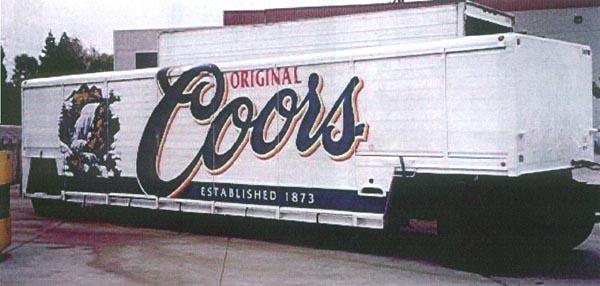
BEER DISTRIBUTING (COORS BEER) - We are coating the interior of roll up doors of our delivery trailers with 40 mils of Thermal-Coat™ to be in compliance with our contract insulation requirements with Coors.
ANHEUSER-BUSCH KAUAI COLD STORAGE - We coated the south and west walls and the roof with Thermal-Coat™. In January, this cut the heat through the walls and roof 15 to 19 degrees. Our electrical energy costs dropped approximately $20,000 a year - about 20% to 25%.
BEER DISTRIBUTOR - SOUTHERN FLORIDA - Before we coated our building (walls and roof), we set our refrigeration at 60 trying to maintain 68 . By three o'clock each afternoon the interior temperature was 72 and climbing. After coating the building, we have our temperature setting at 68 year round. Our energy costs have gone down.
CAPITAL STUDIOS - We used 40 mils of Thermal-Coat™ on the walls and ceiling of a new sound production room. It cut the acoustical noise dramatically so as to not have a sound "ping". The only problem now is that the room is too cold as the air conditioner thermostat is in an adjacent room that is not insulated with Thermal-Coat™, thus is warmer.
JAMES KELLY - The coating on the roof definitely improved the air conditioning in the coach. The girls used blankets several times during the trip. The coating on the upper windshield seemed to do well even though I covered it with black dull paint like aircraft noses in front of the cockpit. If you feel the glass and then the area coated, the glass is definitely hotter. Also the cupboards behind the windshield are cooler. We were definitely more comfortable so it was a success.
PIPE EQUIPMENT CO. - I was in Tijuana this week to check out the job we are doing down there. The Knakk Boxes that we coated with Thermal-Coat are working out very well. The equipment inside is staying nice and cool.
ARIZONA SCHOOL DISTRICT - Coating the roof of one of our metal buildings with Thermal-Coat™ dropped the under roof temperature 40 .
BEER DISTRIBUTOR - SOUTHERN FLORIDA - We coated the roofs of our keg reefer delivery trucks and cut our energy costs by 30%.
------
Thermal-Coat
LIQUID INSULATION APPLIED LIKE PAINT, ACTS AS A THERMAL BARRIER!
Applications
Air Conditioning Duct Work, Aircraft Interior, Airplane Hangers, Alaska Metal Buildings, Alaska Slurry Truck Tanks, Backs of Vinyl Siding, Barracks' Roofs, Bridge Bottoms (reduce freezing), Built Up Roofs. Bus Conversion Interiors, Engine Area, Roofs, Cat Walk Guards, Cat Walk Handles,
Chicken Farm Roof Tops, Commercial Freezers/Refrigerators, Corrugated Roof Tops, Crane Beams,
Decks of Galleys, Decks of Lobster Boats, Engine Room Hot Oil Lines, Exposed Water Hydrants, Exterior Bulkheads, Fishing Boat Tanks and Piping, Flooring, Garages, Grain Silos, Hog Farm Roofs, Horse Trailer Roofs or Interiors, Horse Barns, Hot Water Heaters, Hulls of Ships, Interior Walls of Old Homes, Living Quarters Walls, Living Quarters Roofs, Metal Roofs, Military Installations, Milk or Ice Delivery Truck Roofs, Mobile Home Roofs, Nitrogen Storage Tanks, Oil Pipeline - above or below ground, Oil Pipeline - underwater, Oil Transfer Lines, Oxygen Lines,
Pilot House Roofs, Pipe, Steam insulation, Pipe Lines, Potable Water Tanks, Racing Cars - Fire Walls, Drivers Seat, Floors, Recreational Vehicle Ceiling - Interior, Flooring, Roofs, Reflective Walls in Steel Mills, Refrigeration Trailer Roofs, Remote TV Transmission Trailer Roofs, Residential Black Construction Board, School Bus Tops, Seal Tab Roofing Covers, Semi Trailer Roofs or Interior Walls, SkyLights (Roof Tops), South & West Walls of Metal Buildings, Sprinkler System Pipes (prevents condensation), Truck Van Bodies, Tug Boat Engine Rooms, Undercoating for Transit Buses, Water Truck Tanks, Water Tanks - Cold, Water Storage Tanks
EXTREME USES (UP TO 500 F)
Adjacent to Exhaust Systems, Boilers, Brewing Tanks/Pipe For Beer or Wine, Chemical Hot Mixing Vats, Heat Exchangers, Hot Oil Tanks Oil Separators, Petroleum Tank Tops, Steam Pipes, Valves, Water Pipes - Hot, Hot pipelines.....And Thousands Of Other Uses !!!!!
Suggested Thermal-Coat Insulation Thickness To Reduce Surface Temp. To Approx. 150F/66C
Thickness/Inches60/1000 350F 415F 450 F75/1000 90/1000 90/1000 120/1000 135/1000 150/1000
Temperature F230 F 275 F485 F 500 F
Temperature C 177 C 213C110C 135 C233 C 252 C 260 C
-------------
FREQUENTLY ASKED QUESTIONS ABOUT THERMAL-COAT
1.Up to what maximum heat temperature can your ceramic coat absorb?
-- 500f OR 260C - WE TRY TO KEEP MOST APPLICATIONS UNDER 400F OR 210C BECAUSE OF HEAT SPIKES WHICH CAN EXCEED 500F OR 260C.
2.Can it be applied to steam pipes? YES.
3.As a burn protection to workers? YES.
4.Lets say that I apply your ceramic coat to a steam pipe line exceeding boiling temperature for 5 hours,
a. Will the ceramic still insulate the pipe? YES
b. Will it reduce the outside heat of the pipe to a safe touchable temperature? YES
c. Will it peel off? NO, SO LONG AS IT DOES NOT EXCEED 500F OR 260C.
5.Can it be applied to air condition ducts and the tops of external air conditioners? YES
6.Can it be applied to surfaces to reduce or stop condensation?
-- YES. THE THICKNESS NECESSARY WOULD PROBABLY BE ABOUT 40 TO 60 MILS THICK. (1 MM TO 1.5MM) DEPENDING UPON THE HUMIDITY AND THE TEMPERATURE OF THE UNIT BEING COATED. EXTREME SITUATIONS WILL REQUIRE MORE.
7.Can it be used as replacement to urethane insulation or fiberglass insulation?
-- YES. THERE ARE SITUATIONS WHERE THE OTHER PRODUCTS MAY WORK BETTER OR MIGHT BE CHEAPER. EACH APPLICATION HAS TO HAVE ALL ASPECTS CONSIDERED AS TO EFFECTIVENESS AND COST BENEFITS.
8.What is the texture of your finish product surface? SMOOTH
9.Can it be applied to concrete? YES
10.Can it be painted over after being applied to the concrete?
-- YES. IN A NON-SOLAR APPLICATION, IT CAN BE PAINTED ANY COLOR. RECOMMENDED IS AN ACRYLIC TYPE PAINT.
-- IN A SOLAR APPLICATION, IT IS NOT RECOMMENDED TO BE PAINTED OVER AS IT WILL IMPACT AND REDUCE THE BENEFITS OF THE SOLAR REFLECTION AND HEAT REDUCTION.
11.Does it have corrosive resistant properties?
-- YES. IT ADHERES DIRECTLY TO THE SURFACE, THUS ACTING AS A VAPOR BARRIER. SINCE IT IS IMPERVIOUS TO MOISTURE, IT MINIMIZES/REDUCES THE CHANCE OF CORROSION.
12.Is it acid resistant?
-- NO. IF IT IS GOING TO BE USED IN AN ABRASIVE OR ACID ENVIRONMENT, THEN IT SHOULD BE SEALED WITH AN ACID RESISTANT URETHANE.
13.Does it have any resistance properties to mechanical loads?
-- NO. IT IS NOT DESIGNED TO TAKE MECHANICAL LOADS.
14.Will it adhere or bond to aluminum or stainless steel without primer? YES
15.Can we obtain different colors from the factory?
-- IT IS ONLY PRODUCED IN WHITE. THE DEMAND FOR DIFFERENT COLORS IS TOO LOW TO JUSTIFY MAKING DIFFERENT COLORS. FEW APPLICATIONS REQUIRE COLORING IT.
16.Can we tint it ourselves?
-- YES - USE STANDARD LATEX PIGMENT. USE ABOUT1/4 THE STANDARD AMOUNT OF PIGMENT IN THE COLOR CHARTS FOR 5 GALLONS OF PAINT.
17.What is the application procedure?
-- SEE INFORMATION PACKAGE FOR APPLICATION TECHNIQUES, PROCEDURES, CHECKLIST AND EQUIPMENT.
18.Is there a way to reduce the drying/curing time?
-- YES. BY ADDING HEAT AND INCREASED AIR FLOW, THE DRYING/CURING TIME CAN BE SPED UP. IN THE SUN, CURING TIME IS AN HOUR OR TWO.
19.Is there a way to reduce the number of layers or coats to be applied on a surface to speed up the application?
-- YES. RECOMMENDED THICKNESS PER COAT IS 15 MILS OR .4MM. THIS CAN BE INCREASED TO 20 MILS OR .53MM PER COAT. IT IS NOT RECOMMENDED TO MAKE EACH LAYER THICKER THAN 20 MILS OR .53MM AS IT WOULD NOT CURE PROPERLY AND POSSIBLY SAG, IF ON A VERTICAL SURFACE.
20.Is it a single component application? YES
21.Is there a need for primer?
-- NO. THE SURFACE MUST BE CLEAN, DRY AND FREE OF DUST, DIRT, GREASE OR OIL. ON MOST STEEL SURFACES, IT IS RECOMMENDED TO USE A RUST INHIBITOR PRIMER AS IN THE ORDINARY PREPARATION OF THE STEEL.
22.Can we apply the coating directly on cleaned & prepared surface without primer? YES
23.If there is a need for primer what type of primer do we use?
-- IF PRIMER IS NEEDED, YOU CAN USE RED ZINC OXIDE OR SIMILAR ON BARE METALS, OR IF EXPOSURE TO SALT AIR (OIL RIGS) AND ABRASION ARE EXPECTED.
24.If your coating is applied to the interior of a roof, will it be still as effective?
-- YES AND NO. IT WILL NOT REFLECT THE SOLAR HEAT, BUT WITH 30 TO 40 MILS (.8MM TO 1.0MM) IT WILL BLOCK THE HEAT FROM THE INSIDE. YES, IT STILL WORKS BUT DIFFERENTLY, THUS REQUIRES THICKER APPLICATIONS.
25.I understood that the efficiency of Thermal- Coat is better when exposed to the sun, i.e. not underground, inside a roof, or under an additional coating.
YES, THE BEST APPLICATION IS ON AN EXTERNAL ROOF AT 15 MILS/.4MM. - FOR REDUCING RADIANT SOLAR HEAT GAIN. HOWEVER, WHEN YOU GO TO THERMAL CONDUCTIVE HEAT, THEN YOU HAVE TO USE MORE PRODUCT TO BLOCK CONDUCTIVE HEAT. THIS IS THE SAME WITH ALL INSULATIONS. WITH THERMAL-COAT, MOISTURE WILL NOT IMPACT ITS INSULATION EFFECTIVENESS AS WITH STANDARD INSULATIONS
26.Can it be applied as an interior or exterior coating?
-- YES. EXTERIOR AT 15 MILS (.4MM) AND INTERIOR 30 MILS (.8MM) OR MORE DEPENDING UPON THE SITUATION.
27.Does it stain easily, how do we clean it?
-- YES, JUST LIKE WHITE PAINT STAINS. CLEAN WITH SOAP AND WATER.
28.Can it be removed from a surface if necessary?
-- YES. PAINT THINNER OR PAINT STRIPPER WILL TAKE IT OFF SLOWLY.
29.Is the surface affected after removing it?
-- THE SURFACE WILL PROBABLY NOT BE AFFECTED, BUT EACH APPLICATION IS DIFFERENT, SO THIS IS NOT A KNOWN FACTOR.
30.How long is the shelf life of your products? ONE YEAR WHEN STORED INSIDE IN A COOL PLACE.
31.How long will it last? WARRANTY IS FOR TWO YEARS IN INDUSTRIAL APPLICATIONS (HOT PIPE ETC.) AND 10 YEARS FOR COMMERCIAL APPLICATIONS (ROOFS ETC.)
32.Do you recommend the use of an additional urethane coating?
-- YES, WE RECOMMEND SEALING THE THERMAL COAT IN PIPE APPLICATIONS BECAUSE IT WILL SUSTAIN OVER TIME ABUSE FROM HUMANS, ANIMALS AND OTHER INSECTS
33.Do you recommend any specific urethane?
-- YES. A URETHANE MANUFACTURED HERE WHICH IS VERY GOOD AND EFFECTIVE.
34.What would be the difference in savings (in %) with or without the urethane?
-- NO INSULATION SAVINGS, JUST LONG TERM PROTECTION FOR THE COATING
35.How long between coats (min)?
-- GENERALLY, WAIT 24 HOURS BETWEEN COATS. AMBIENT AIR TEMPERATURE AND AIR FLOW ARE THE BIGGEST FACTORS. HOT SURFACES MAY BE RE-COATED WHEN DRY TO THE TOUCH FOR THE 1ST AND 2ND COATS, THEN ALLOW IT TO CURE OVERNIGHT. WITH A LONG PIPE, YOU COULD START ONE CREW EACH DAY FOR EACH COAT AND HAVE EACH CREW APPLY A COAT. ANOTHER CREW FOR THE URETHANE.
36.What are the main criteria for evaluating the required thickness?
FOR A PIPELINE :
-- IS IT ABOVE GROUND OR BELOW GROUND?
-- IS IT IN AN ABUSIVE ENVIRONMENT? DOES THE INSULATION NEED TO BE SEALED?
-- WHAT IS THE INSIDE TEMPERATURE OF THE PIPE?
-- WHAT IS THE OUTSIDE TEMPERATURE OF THE PIPE?
-- WHAT IS THE OUTSIDE & INSIDE TEMPERATURE YOU WISH TO MAINTAIN?
-- WHAT IS THE AMBIENT AIR TEMPERATURE OR GROUND TEMPERATURE?
-- WILL YOU HAVE RE-HEATING STATIONS ON THE LINE?
-- CONSIDER ALSO THAT ALL ELBOWS, VALVES AND OTHER FITTINGS CAN BE INSULATED WITH THERMAL-COAT JUST BY SPRAYING THEM WITHOUT HAVING TO CREATE OR MANUFACTURE SOME SPECIAL INSULATION BOX. THERMAL-COAT WOULD ALSO BE ANTI-CORROSIVE AS IT IS IMPERVIOUS TO WATER, THUS SEALS THE PIPE. IT IS ALSO WHEN SEALED, RESISTANT TO BUGS OR SMALL ANIMALS FROM TRYING TO LIVE IN IT WHICH IS NORMAL FOR FOAM INSULATION. FOAM ALSO SLOWLY BECOMES WATER SATURATED WHICH THEN CEASES TO INSULATE.
Below
is the Original Text and will be deleted.
The Testimonials will be replaced with new text
and formatted similarly.
SPECIFICATION INFORMATION
PRODUCT
Thermal-Coat
Liquid Ceramic Insulation Coating.
DESCRIPTION:
Thermal-Coat is a general purpose insulation which comes in liquid form, available in regular and noncombustible (fire resistant) formulation. Thermal-Coat provides an inexpensive alternative to the high cost of industrial insulation. Because it physically adheres to the surface that it is insulating, it significantly reduces corrosion and rust formation. Its use can greatly reduce the costs of other materials and increase the size of an interior space by eliminating the thickness of interior walls required to accommodate insulation. Its use reduces both space and weight for any given structure or piece of equipment.
MAKE UP:
Thermal-Coat is a complete mixture of various silica and ceramic beads immersed in a high quality latex base with acrylic binders. This combination of materials makes the product extremely lightweight and pliable, therefore, it expands and contracts with the surface to which it is applied. The resiliency of Thermal-Coat allows it to double as a leak stop even though it is not sold or warranted for that purpose.
OTHER PROPERTIES:
Thermal-Coat can be tinted to virtually any medium to pastel color and the tinting does not affect the radiant effectiveness of the product.
PRODUCT QUALITY:
Thermal-Coat works well on both convective and conductive heat and cold. When used in ways not requiring solar reflective qualities, its effectiveness has different values. Unlike conventional insulation such as fiberglass batting, blankets, foam, fiber insulations, or calcium silicate type pre-formed insulation for piping, Thermal-Coat is impervious to water and is not affected by salt water. It forms a continuous covering, not sectioned, like an installed product. It also forms an excellent weatherproof coating over other forms of insulation.PRODUCT LIMITS:
Thermal-Coat aids in sealing leaks but is not sold as a leak-stop. Product must be applied over a clean, dry, grease and dirt free substrate. Operating temperatures can be from -45°F to 500°F. Application temperatures range from 45°F to 200°F. On extremely warm to hot surfaces, (175°F/90°C or more) initial coats must be thinned to avoid blistering.
APPLICATION:
Apply Thermal-Coat on a dry, clean, substrate which is free from oil, grease, wax, dirt, rust or corrosion. Use airless sprayer with 3000 PSI, 1.25 GPM, 28:1 ratio with a .021 tip size. - Or an SG-1 Spray Gun using shop air can be used for small applications. Allow product to dry between coats. This is a one coat system with curing time of 12 hours under room temperature conditions. Brush may be used for touch up, but is not recommended for full application, except in under 500 sq. ft. Approximate Coverage: Spray: 60 SF per gallon at 1 5 mil (15/1000 inch) thickness on large (1000 sq. ft or more) flat surface. Add 20% for uneven or corrugated surface.
CLEAN-UP:
Thermal-Coat is a latex based product.
Clean up immediately after use with soap and water.
Caution: Use drop cloth and necessary protection to prevent damage from drips or over spray.
TEST RESULTS:
Thermal-Coat has been tested under of varying conditions to produce an 'R' factor equivalence.
ACCORDING TO TEST RESULTS, Thermal-Coat, APPLIED ON ROOFS AT 15 MILS (15/1000 in.), PERFORMS AS WELL AS 4"THICKNESS OF FOAM WITH R-20 RATING'R' FACTOR EQUIVALENCE. THIS IS IN HIGH (RADIANT HEAT) APPLICATIONS. (41 %reduction in Heat Flux between uncoated and coated roofs.)
NOTE: Due to the absence of air flow, an "R' factor cannot be used. All tests are performed comparing the usefulness of this insulation with an 'R' Factor Equivalence. In a conductive heat application, the results will be different from a solar application.ASTM TESTS:
FLAMMABILITY RESULTS TEST METHOD ASTM E-84-98 - Class A rated
MECHANICAL PROPERTIES:
Cross Hatch Adhesion 100% ASTM-3359
Tensile Strength (lb/in2) 6 6.7 % ASTM D882 Elongation 65%PHYSICAL PROPERTIES:
- Accelerated Aging:
Passed 200 Hours ASTM G-53- Density:
(0.508 g/cm3) AT 24c dried film 0.41 ASTM D-792- Weight per Gallon (lbs. per gal):
5.7 lbs wet- Weight:
Non-volatiles 75%- Brookfield Viscosity:
#3 Spindle @ 30 rpm,- Centipoise:
2200 +/- 100 cps- Solar reflectance:
7 5 % of solar radiation- Emittance:
85% of radiation absorbed- ASTM B 1 77 Salt Fog Test:
passed 21 00 hrs. No Product Degradation and No Corrosion- DOE Solar test:
Cut heat flux by 41 %.OTHER EXCEPTIONAL FEATURES:
Thermal-Coat has low flame spread, is impact and abrasion resistant, is flexible, protects coated surfaces from ponding water, wind driven rain, cold-heat cycling, chemical vapors, and mildew. These qualities make it the standard in ceramic coatings.
SHIPPING AND SUPPLY METHOD:
Thermal-Coat is available FOB from a distributor.
WARRANTY:
Limited Warranty: Thermal-Coat is warranted as an insulation under normal commercial use and installation conditions for ten years from the date of application. Two year warranty for industrial uses. Complete warranty information is available.
PERFORMANCE INFORMATION:Rooftop installation:
- 15 mil thickness (15/1000 inch) can reduce heat flux roof by 40% or more in solar situations (reduction of 20 to 40 degrees) which is better than adding R-20 insulation under a roof to stop solar heat.
RV/Bus/Truck/Trailer Installation:
- 15 mils thickness on a roof can cut heat flux transfer by 40% or more
(20°F to 40°F).- 45 to 60 mils thickness in the engine compartment/fire wall can cut the heat inside the RV/bus.
- 30 mils on the walls, ceiling and floor of the interior shell can increase the insulation of the RV/bus/trailer without increasing wall thickness.
Boiler or Hot Pipe Installation:
- Actual installations have shown that a 60 mil thickness (60/1000") will reduce exterior boiler wall temperatures from over 350°F to less than 200°F.
- Excellent for insulating hot pipe/surfaces up to 500°F or cold pipe/surfaces in hot environments.
Ship Installation:
- Hulls can be coated to insulate & seal (±40 mils). Keeps moisture off hulls.
- Insulate hot or cold piping (60-100 mils).
- Insulate hot or cold tanks, refrigeration units or systems (60-100 mils).
- Insulate deck housing from solar heat (15 mils).
| INFO | TESTIMONIALS | FAQ | CONTACT | PHOTOS |
MITCH'S MEATS, ASSINIBOIA SASKATCHEWAN- "The Thermal Coat system was applied to one cooler in my meat plant. I'm saving 38% in electrical costs on the cooler, plus saving wear and tear on cooling equipment. Can't wait to get the whole plant done."
B.T.S BYERS TRANSPORT, MEDICINE HAT ALBERTA- "Our problem with some chemicals for oil companies freezing in winter was solved by an application of Thermal Coat sprayed inside one chem. truck (van box)."
BEER DISTRIBUTOR - SOUTHERN FLORIDA - Before we coated our building (walls and roof), we set our refrigeration at 60'F trying to maintain 68'F. By three o'clock each afternoon the interior temperature was 72'F and climbing. After coating the building, we have our temperature setting at 64'F during the peak heat of the summer and 68'F the rest of the year. Our energy costs have also gone down.
BOB SANFORD, COACH WORKS, CAL. said: "After coating the roof of our coach with Thermal-Coat, we could tell the difference that afternoon. It was not only cooler inside the coach, but the metal roof was now cool to the touch, instead of hot in the southern California sun. The interior temperature dropped 25 degrees."
GORDON MILLS, LOS ANGELES said: "We put Thermal-Coat on our coach roof . We noticed a dramatic difference in the coach temperature the next day. It is much cooler. The air conditioner does not run as much."
SOUTHERN ATHLETIC CLUB - Since having our roof coated with Thermal-Coat in June of 1991, we are averaging a 30,000 kilowatt savings annually which equates to a savings of $4,113.00. We think it is a great product for conserving energy and dollars.
ATLANTA GAS LIGHT COMPANY - "Since spraying our roof with your ceramic coating, we have had no further water leaks and have reduced our cooling costs considerably. It is really a fine product that performs as promised."
QUALITY MACHINE SVCS, INC. - Before our roof was coated with Thermal-Coat, our offices could not be cooled by the air conditioners, which remained on all day without dropping the temperature below about 80'F. Since the roof was coated, our central air-conditioning system cycles as it should and we have been able to cool our offices to the temperatures we desired.
AUBURN UNIVERSITY - Dept. of Chemical Engineering - By applying two coats of Thermal-Coat (on two waste oil process tanks), we have successfully maintained the oil temperature above 170'F in the tanks for nearly 12 hours. The initial temperature was 180'F and the outdoor temperature ranged from 30 to 60'F. We are very pleased with the results.
OAK RIDGE NATIONAL LABORATORY (DOE) - Solar test of a roof coated with 15/1000 of an inch of Thermal-Coat, the heat flux was reduced by an average of 41%.
GULF COAST SULPHUR CORPORATION - "Before, one could not place hands closer than l8" to 300 degree pipe. After applying Thermal-Coat one can place hands directly on the area. It is doing an excellent job for us."
DYNAPOWER - Thermal-Coat was very impressive when tested for insulating for breakdown volts. At 26 mils it was effective to 1400 breakdown volts and at 50 mils it was effective to 2500 breakdown volts.
DANVILLE DISTRIBUTORS (BUDWEISER BEER) - After the reefer roof was coated, we pulled the temp down to 34 and left it overnight in a hot humid evening with the reefer off and the next morning it was still 40 degrees. We were very pleased. On the trailer, we are now able to keep it down to 40'F which we couldn't do before.
B & K DISTRIBUTING (COORS BEER) - We are coating the interior of roll up doors of our delivery trailers with 40 mils of Thermal-Coat to be in compliance with our contract insulation requirements with Coors.
ANHEUSER-BUSCH KAUAI COLD STORAGE - We coated the south and west walls and the roof in January with Thermal-Coat. Even in January, this cut the heat through the walls and roof by 15 degrees. Our electrical energy costs have dropped approximately $20,000 a year or about 20% to 25%.
CAPITAL STUDIOS - We used 40 mils of Thermal-Coat on the walls and ceiling of a new sound production room. It cut the acoustical noise dramatically so as to not have a sound "ping". The only problem now is that the room is too cold as the air conditioner thermostat is in an adjacent room that is not insulated with Thermal-Coat, thus is warmer.
JAMES KELLY - The coating on the roof definitely improved the air conditioning in the coach. The coating on the upper windshield seemed to do well even though I covered it with black dull paint like aircraft noses in front of the cockpit. If you feel the glass and then the area coated, the glass is definitely hotter. Also the cupboards behind the windshield are cooler. We were definitely more comfortable so it was a success.
CORPUS CHRISTI ARMY DEPOT (CCAD) "Everyone who has visited Building 1200 since our roof was treated has volunteered their building for treatment with Thermal-Coat and Last-A-Span as soon as possible. Since Thermal-Coat was applied, we have had no leaks and the air conditioning system now cycles off and on. Before the building was treated, the air-conditioning system ran all day without ever cycling and without very effective cooling."
ARIZONA SCHOOL DISTRICT - Coating the roof of one of our metal buildings with Thermal-Coat dropped the under roof temperature 40'F.
Thermal-Coat LIQUID CERAMIC INSULATION COATING
| INFO | TESTIMONIALS | FAQ | CONTACT | PHOTOS |
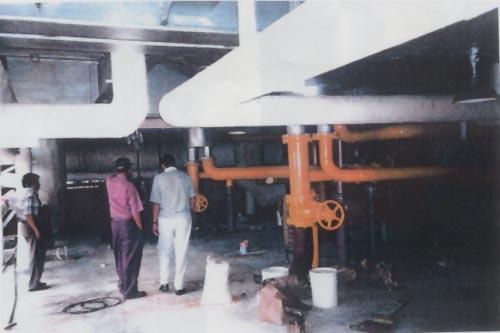
Please click on an image to view full size. (use your browser's back button to return)
..
 |
 |
 |
 |
 |
|
|
||||
|
Before and After Views >>>>>> |
 |
 |
 |
|
..
| INFO | TESTIMONIALS | FAQ | CONTACT | PHOTOS |
FREQUENTLY ASKED QUESTIONS ABOUT THERMAL-COAT
1. Up to what maximum heat temperature can your ceramic coat absorb?
500°F OR 260°C - WE TRY TO KEEP MOST APPLICATIONS UNDER 400°F OR 210°C BECAUSE OF HEAT SPIKES WHICH CAN EXCEED 500°F OR 260°C.
2. Can it be applied to steam pipes?
YES.
3. As a burn protection to workers?
YES.
4. Lets say that I apply your ceramic coat to a steam pipe line exceeding boiling temperature for 5 hours...
- Will the ceramic still insulate the pipe?
- YES
- Will it reduce the outside heat of the pipe to a safe touchable temperature?
- YES
- Will it peel off?
- NO, SO LONG AS IT DOES NOT EXCEED 500°F OR 260°C.
5. Can it be applied to air condition ducts and the tops of external air conditioners?
YES
6. Can it be applied to surfaces to reduce or stop condensation?
YES. THE THICKNESS NECESSARY WOULD PROBABLY BE ABOUT 40 TO 60 MILS THICK. (1 MM TO 1.5MM) DEPENDING UPON THE HUMIDITY AND THE TEMPERATURE OF THE UNIT BEING COATED. EXTREME SITUATIONS WILL REQUIRE MORE.
7. Can it be used as replacement to urethane insulation or fiberglass insulation?
YES. THERE ARE SITUATIONS WHERE THE OTHER PRODUCTS MAY WORK BETTER OR MIGHT BE CHEAPER. EACH APPLICATION HAS TO HAVE ALL ASPECTS CONSIDERED AS TO EFFECTIVENESS AND COST BENEFITS.
8. What is the texture of your finish product surface?
SMOOTH
9. Can it be applied to concrete?
YES
10. Can it be painted over after being applied to the concrete?
YES. IN A NON-SOLAR APPLICATION, IT CAN BE PAINTED ANY COLOUR. RECOMMENDED IS AN ACRYLIC TYPE PAINT.
IN A SOLAR APPLICATION, IT IS NOT RECOMMENDED TO BE PAINTED OVER AS IT WILL IMPACT AND REDUCE THE BENEFITS OF THE SOLAR REFLECTION AND HEAT REDUCTION.
11. Does it have corrosive resistant properties?
YES. IT ADHERES DIRECTLY TO THE SURFACE, THUS ACTING AS A VAPOR BARRIER. SINCE IT IS IMPERVIOUS TO MOISTURE, IT MINIMIZES/REDUCES THE CHANCE OF CORROSION.
12. Is it acid resistant?
NO. IF IT IS GOING TO BE USED IN AN ABRASIVE OR ACID ENVIRONMENT, THEN IT SHOULD BE SEALED WITH AN ACID RESISTANT URETHANE.
13. Does it have any resistance properties to mechanical loads?
NO. IT IS NOT DESIGNED TO TAKE MECHANICAL LOADS.
14. Will it adhere or bond to aluminum or stainless steel without primer?
YES
15. Can we obtain different colors from the factory?
IT IS ONLY PRODUCED IN WHITE. THE DEMAND FOR DIFFERENT COLOURS IS TOO LOW TO JUSTIFY MAKING DIFFERENT COLORS. FEW APPLICATIONS REQUIRE COLOURING IT.
16. Can we tint it ourselves?
YES - USE STANDARD LATEX PIGMENT. USE ABOUT 1/4 THE STANDARD AMOUNT OF PIGMENT IN THE COLOUR CHARTS FOR 5 GALLONS OF PAINT.
17. What is the application procedure?
SEE INFORMATION PACKAGE FOR APPLICATION TECHNIQUES, PROCEDURES, CHECKLIST AND EQUIPMENT.
18. Is there a way to reduce the drying/curing time?
YES. BY ADDING HEAT AND INCREASED AIRFLOW,
THE DRYING/CURING TIME CAN BE SPED UP. IN THE
SUN, CURING TIME IS AN HOUR OR TWO.19. Is there a way to reduce the number of layers or coats to be applied on a surface to speed up the application?
YES. RECOMMENDED THICKNESS PER COAT IS 15 MILS OR .4mm. THIS CAN BE INCREASED TO 20 MILS OR .53mm PER COAT. IT IS NOT RECOMMENDED TO MAKE EACH LAYER THICKER THAN 20 MILS OR .53mm AS IT WOULD NOT CURE PROPERLY AND POSSIBLY SAG, IF ON A VERTICAL SURFACE.
20. Is it a single component application?
YES
21. Is there a need for primer?
NO. THE SURFACE MUST BE CLEAN, DRY AND FREE OF DUST, DIRT, GREASE OR OIL. ON MOST STEEL SURFACES, IT IS RECOMMENDED TO USE A RUST INHIBITOR PRIMER AS IN THE ORDINARY PREPARATION OF THE STEEL.
22. Can we apply the coating directly onto a clean, prepared surface without primer?
YES, (HOT PIPE ETC.) AND 10 YEARS FOR COMMERCIAL APPLICATIONS
(ROOFS ETC.)23. If there is a need for primer what type of primer do we use?
IF PRIMER IS NEEDED, YOU CAN USE RED ZINC OXIDE OR SIMILAR ON BARE METALS, OR IF EXPOSURE TO SALT AIR (OIL RIGS) AND ABRASION ARE EXPECTED.
24. If your coating is applied to the interior of a roof, will it be still as effective?
YES AND NO. IT WILL NOT REFLECT THE SOLAR HEAT, BUT WITH 30 TO 40 MILS (.8mm TO 1.Omm) IT WILL BLOCK THE HEAT FROM THE INSIDE. YES, IT STILL WORKS BUT REQUIRES A THICKER APPLICATION.
25. I understood that the efficiency of ThermalCoat is better when exposed to the sun, i.e. not underground, inside a roof, or under an additional coating.
YES, THE BEST APPLICATION IS ON AN EXTERNAL ROOF AT 15 MILS/.4MM. - FOR REDUCING RADIANT SOLAR HEAT GAIN. HOWEVER, WHEN YOU GO TO THERMAL CONDUCTIVE HEAT, THEN YOU HAVE TO USE MORE PRODUCT TO BLOCK CONDUCTIVE HEAT. THIS IS THE SAME WITH ALL INSULATIONS. WITH THERMAL-COAT, MOISTURE WILL NOT IMPACT ITS INSULATION EFFECTIVENESS AS WITH STANDARD INSULATIONS.
26. Can it be applied as an interior or exterior coating?
YES. EXTERIOR AT 15 MILS (.4MM) AND INTERIOR 30 MILS (.8MM) OR MORE DEPENDING UPON THE SITUATION.
27. Does it stain easily, how do we clean it?
YES, JUST LIKE WHITE PAINT STAINS.
CLEAN WITH SOAP AND WATER.28.Can it be removed from a surface if necessary?
YES. PAINT THINNER OR PAINT STRIPPER WILL TAKE IT OFF SLOWLY.
29. Is the surface affected after removing it?
THE SURFACE WILL PROBABLY NOT BE AFFECTED, BUT EACH APPLICATION IS DIFFERENT, SO THIS IS NOT A KNOWN FACTOR.
30. How long is the shelf life of your products?
ONE YEAR WHEN STORED INSIDE IN A COOL PLACE.
31. How long will it last?
WARRANTY IS FOR TWO YEARS IN INDUSTRIAL APPLICATIONS
32. Do you recommend the use of an additional urethane coating?
YES, WE RECOMMEND SEALING THE THERMAL COAT IN PIPE APPLICATIONS BECAUSE IT WILL SUSTAIN OVER TIME ABUSE FROM HUMANS, ANIMALS AND OTHER INSECTS.
33. Do you recommend any specific urethane?
YES, A URETHANE MANUFACTURED HERE WHICH IS VERY GOOD AND EFFECTIVE.
34. What would be the difference in savings (in %) with or without the urethane?
NO INSULATION SAVINGS, JUST LONG TERM PROTECTION FOR THE COATING
35. How long between coats (min)?
GENERALLY, WAIT 24 HOURS BETWEEN COATS. AMBIENT AIR TEMPERATURE AND AIR FLOW ARE THE BIGGEST FACTORS. HOT SURFACES MAY BE RE-COATED WHEN DRY TO THE TOUCH FOR THE 1st and 2nd COATS, THEN ALLOW IT TO CURE OVERNIGHT. WITH A LONG PIPE, YOU COULD START ONE CREW EACH DAY FOR EACH COAT AND HAVE EACH CREW APPLY A COAT. ANOTHER CREW FOR THE URETHANE.
36. What are the main criteria for evaluating the required thickness?
FOR A PIPELINE :
- IS IT ABOVE GROUND OR BELOW GROUND?
- IS IT IN AN ABUSIVE ENVIRONMENT?
- DOES THE INSULATION NEED TO BE SEALED?
- WHAT IS THE INSIDE TEMPERATURE OF THE PIPE?
- WHAT IS THE OUTSIDE TEMPERATURE OF THE PIPE?
- WHAT IS THE OUTSIDE & INSIDE TEMPERATURE YOU WISH TO MAINTAIN?
- WHAT IS THE AMBIENT AIR TEMPERATURE OR GROUND TEMPERATURE?
- WILL YOU HAVE RE-HEATING STATIONS ON THE LINE?
CONSIDER ALSO THAT ALL ELBOWS, VALVES AND OTHER FITTINGS CAN BE INSULATED WITH THERMALCOAT JUST BY SPRAYING THEM, WITHOUT HAVING TO CREATE OR MANUFACTURE SOME SPECIAL INSULATION BOX. THERMAL-COAT WOULD ALSO BE ANTICORROSIVE AS IT IS IMPERVIOUS TO WATER, THUS SEALS THE PIPE. ONCE SEALED THE PIPE IS RESISTANT TO BUGS OR SMALL ANIMALS, A COMMON PROBLEM WITH FOAM INSULATION. FOAM ALSO SLOWLY BECOMES WATER SATURATED WHICH THEN CEASES TO INSULATE.
| INFO | TESTIMONIALS | FAQ | CONTACT | PHOTOS |
| CONTACTS:
Tom Fehr |
John
Fehr Phone: (306)778-6199 E-mail: johnfehr@skybiz.com |
Ned
Mitchell Phone: (403)330-2747 Fax: (403)320-2340 E-mail: nedmitchell@home.com |
| INFO | TESTIMONIALS | FAQ | CONTACT | PHOTOS |